A RTX 2080 Ti can't even push 144fps on 1440p at max, much less 4k.
12k is possible but it's hardly around the corner. Even 4K has both content and hardware issues around it. 8K is going to be the next mass market push but we're not even done with the 4K party.
Also 4K display devices are available at a modest price point now. The bigger issues are content. We're mostly there with mass-market media, but if you want to drive a AAA video game at 4K resolution you're having to make compromises and spend a lot on the hardware to drive it.
They're going to keep making new things. And the new things are going to have bigger numbers. It's okay.
https://www.digitaltrends.com/computing/asus-rog-swift-360hz...
Assuming our current standard of 8 bits per color with no alpha (3 bytes per pixel), which may be too low if you care so much about your monitor, your required bandwidth becomes:
7680 * 4320 * 3 * 1000 = 99532800000
99532800000 / 1024 / 1024 / 1024 = 92 gigabytes per second of bandwidth you will consume just to pump stuff to your monitor. Better not use integrated graphics!
To give a comparison, here's 4k@60hz:
3840 * 2160 * 3 * 60 = 1492992000
1492992000 / 1024 / 1024 = 1423 Mb/s.
Also notice that 8k monitors already employ tactics such as "visually lossless compression" (which means: lossy compression but they think you won't notice) and other stuff aimed at trying to not really submit full frames all the time.
Forget your 12k. It will only be useful to increase your energy bill.
Edit: fix calculations.
By 960Hz even a lossless delta coding scheme on the wire could reduce the bandwidth by over 10X for any normal footage.
If you have a few million dollars to spare, you could jump to 16k: https://www.techradar.com/news/sonys-16k-crystal-led-display...
For comparison, netflix was just barely able to saturate a 100gbps (that's gigabits per second, so only 12.5 gigabytes) network link from one computer, and that's just pumping data without having to render anything.
For me, that’s a bit more than 1440p at 3 feet at 27”.
https://www.quora.com/What-is-the-highest-frame-rate-fps-tha...
https://www.reddit.com/r/askscience/comments/1vy3qe/how_many...
https://blurbusters.com/blur-busters-law-amazing-journey-to-...
This is probably good enough in practice, although you can see differences even beyond 1000Hz by observing the phantom array effect of flickering signals during fast eye movement.
When it comes to such a high framerate, the upgrade is akin from going from 256-color palette-swapping VGA to 24-bit HD, or ather from stop motion to realistic motion blur.
I also learned that literally pouring liquid nitrogen over a CPU from a cup is a grandmaster overclocker move.
Seems like the heat flow would be substantially impeded by any boiling of the LN2.
Or, for that matter, simply using a chilled copper ingot as the heat sink? There must be some threshold at which the limiting problem is getting the heat out of the die, not getting the heat out of the chip's package.
https://www.qats.com/cms/2019/08/02/quantum-computing-coolin...
Of course, the real grandmaster move is to use liquid helium - its boiling point is about 70C colder than nitrogen :)
“It's a lot easier to control a benchmark which is always the same”, explains Rywak. "A game makes the whole process less predictable in terms of hardware load which could lead to stability issues while working on frozen hardware.”
It weighed a tonne and took up quite a lot of desk.
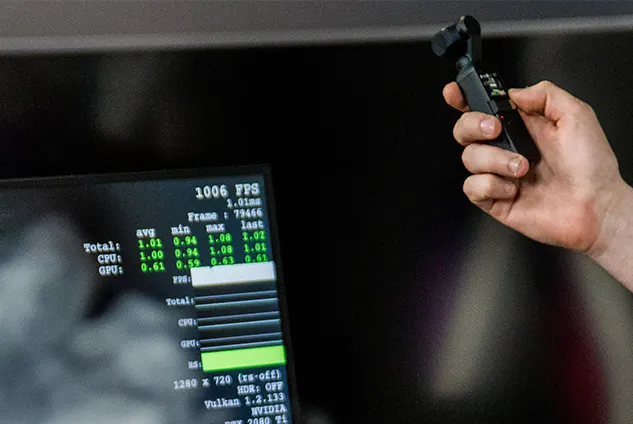
Edit: seems mobile and desktop have a different crop of that image. Here is the image that shows 720: https://images.ctfassets.net/rporu91m20dc/1XYHhlYZzNI1NxRRJl...
That would make sense as well in their discussion about CPU power - that resolution would require a lot of it compared to, say, 4k.