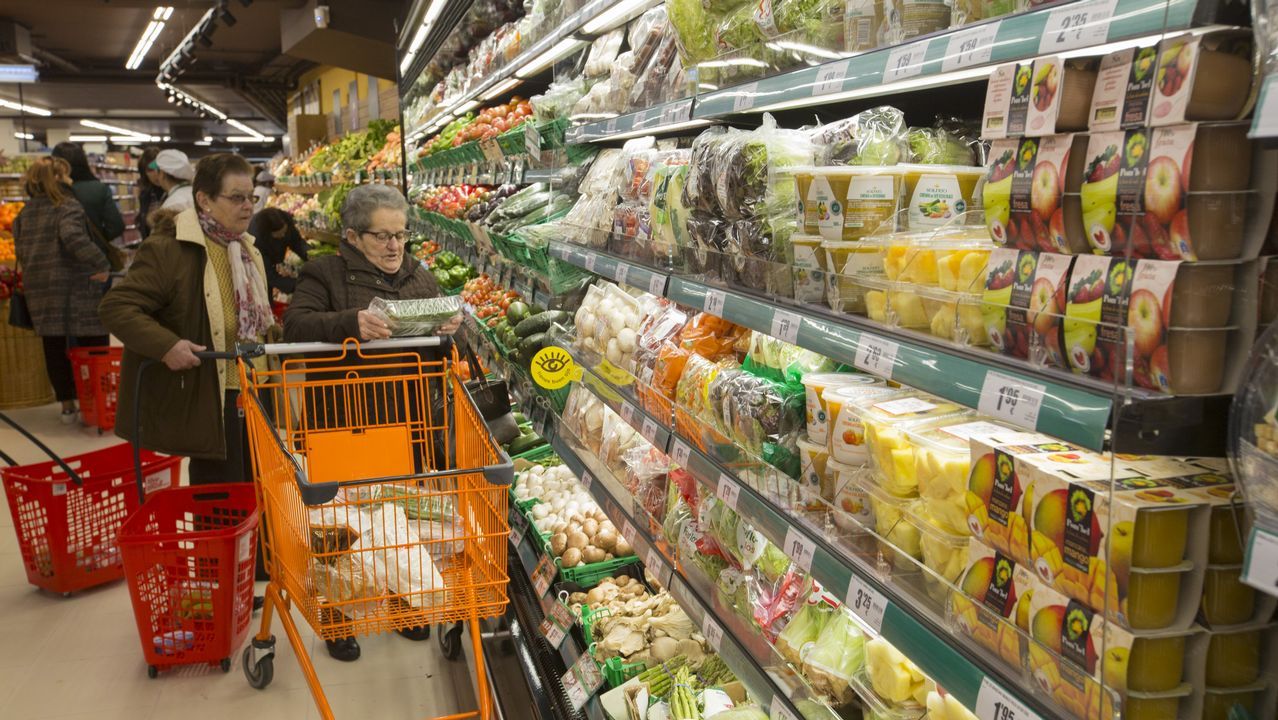
There I was thinking the main purpose of a price tag is to tell you the price.
Product packaging is meant to grab your eye. Price tags are mostly functional (although some shops also use them to advertise offers).
Don't assume alignment of incentives. From the customer's perspective, the purpose of a price tag is to tell you the price. The customer isn't making the purchasing decisions for the price tags.
This is a typical example: https://cflvdg.avoz.es/sc/X71nZnU3spbY_97PpRRHtVnNB20=/x/201... - the price tags are standard, but the yellow sign with the eye ("you have a keen eye!") draws your attention to a particular tag. If they want to draw your attention even more they will use a larger sign, no problem.
By the way, eInk price tags in supermarkets here are common. Far from ubiquitous, but common.
I'm not sure that's really true.
What a supermarket like Tesco wants to do is sell stuff at a high price to people who don't care about the price (there are a lot of such people) while having stuff available at a low price to people who will only buy it if the price is competitive (there are also a lot of those people). One way to do that is to put the expensive stuff at eye level and the cheaper stuff on the bottom shelf. Another way to do it is to have periodic offers: some people will buy certain products only when they're on offer. Yet another way to do it is to make the prices hard to read or hard to compare. And the shops do that, in my experience. E Ink could be another tool for that. "Almost illegible from a distance of more than 40 cm" could be a selling point.
In certain areas, the consumer laws are such that the lowest of the register price and the displayed price must be used, and in other even friendlier jurisdictions, a discount of $10 has to be applied to the shelf price if the shelf price is lower than the register price (including giving away the item for free if the item is worth less than $10).
In those jurisdictions, ensuring that the price is correctly synchronized between displays and the registers is significantly more important than in jurisdictions with weaker consumer laws.
Handling all this data and keeping it up to date is much easier with digitised and synchronised displays.
I bought the requirements, and passed by a the crisps (potato chips) aisle on my way to the chocolate. A glance half an aisle away told me that one of the three or four kinds of crisps my partner takes to work was on offer, I had half an aisles walking where I thought about it and ended up buying it.
In the chocolate aisle I ended up buying a large bag of white chocolate that was particularly well priced (I could read every label from one place). As chocolate is a guilty luxury I've been known to leave without it if my deliberations last too long; being able to parse the information quickly led to a purchase.
--
So that is why. Most shoppers are both immediately price driven and don't want to be there. This can be used to increase spends.
They advertise their % off original retail to increase volumes of sales.
Price is their theoretical business, if the products were enticing enough themselves they'd not have made it to Kohls.