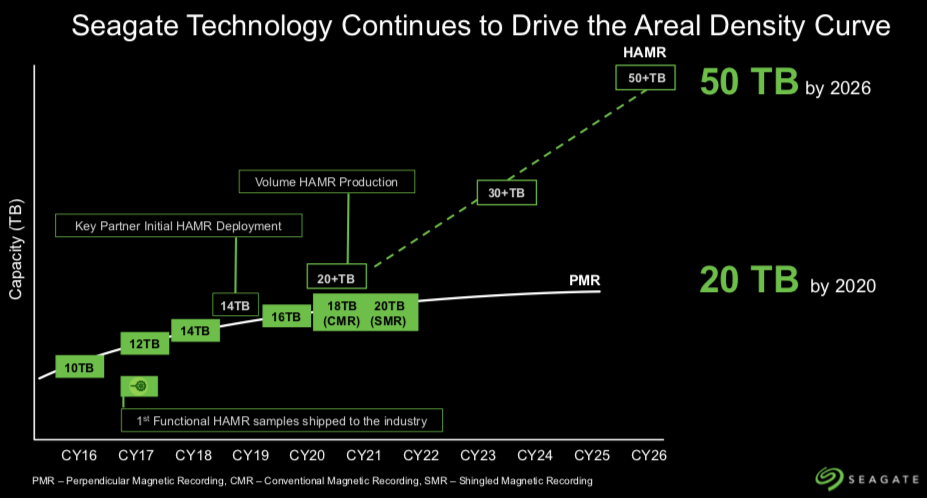
I should've phrased that better. What I meant was to assume consumer affordable storage space will increase
in size exponentially i.e. if we pay $0.01 / GB today, we should be paying fractions of that fraction in a year (because obviously "exponential" is loose term here).
> (ignoring things like High Frequency Trading)
HFT is not a blockchain transaction. They are off blockchain transactions entirely because they trade money between bitcoin / other cryptos and dollars.
> there is only a limited number of potential active crypto-currency users
My entire point is that this limits them from growing. If the blockchain is kept from exploding, it helps to onboard more users.
> Would you say that the credit card network, or PayPal, has exponentially increasing storage requirements?
Indeed not. But their user base is now standardised. So they have a predictable number of transactions every second. However, their storage requirements are still obviously industrial grade server farms. The point of bitcoin is that everyone should have a copy of every transaction (excluding lightning network transactions). You see the connection? Not all of us can have our own server farms. If we all wants to store every transaction in the way the parent of my previous comment alluded to (increase block size), each of us will need our own mini server farm i.e. exponential storage growth.
> It's possible for Bitcoin (for example) to be decentralised and useful to the world and only require linearly increasing storage space.
Yes. It'll level off at some point. But we are far, faaar away from that point. So it'll take quite a while before it levels off.