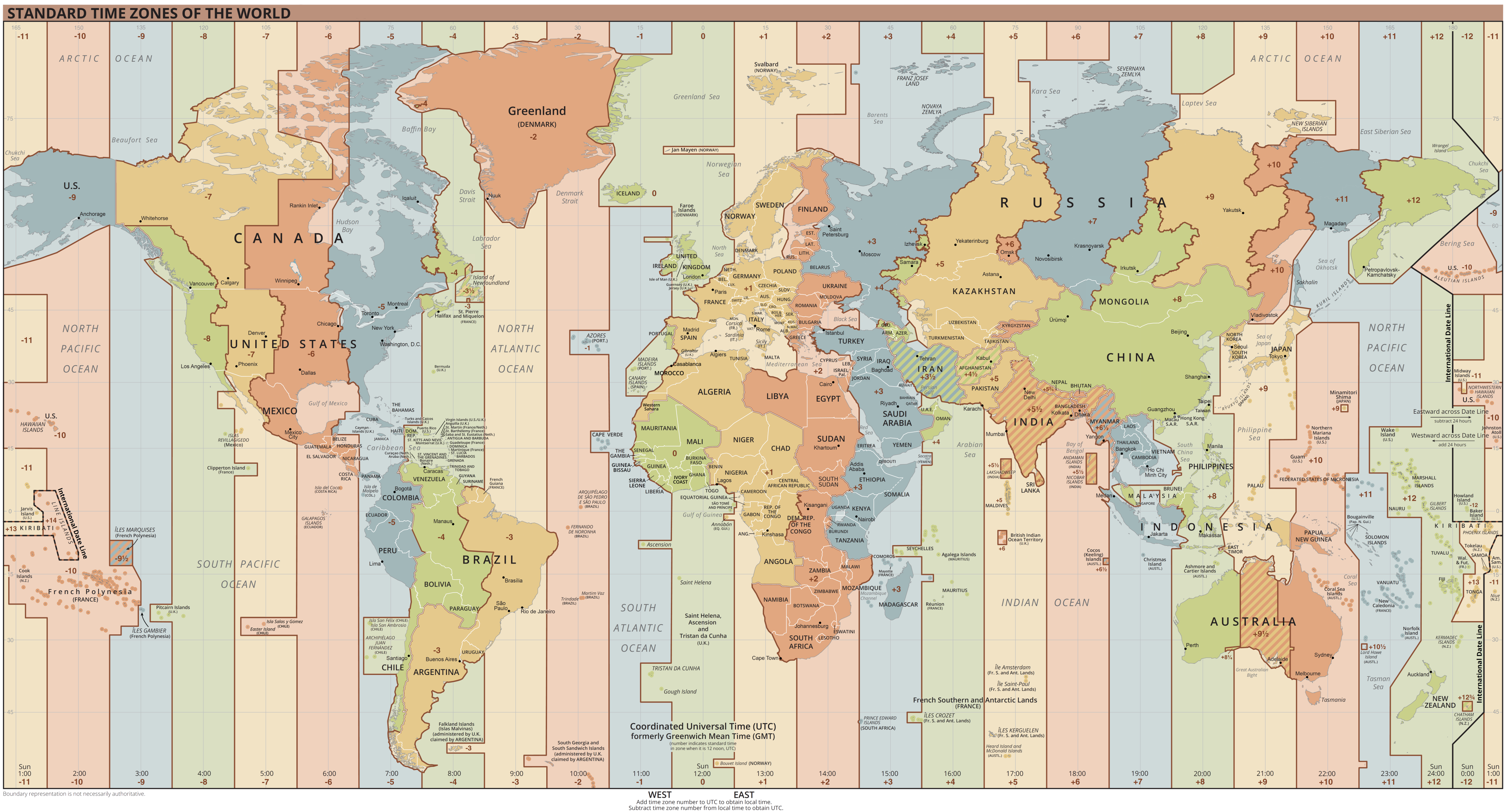
So if you travelled vertically within a timezone, you could end up going back and forth by an hour repeatedly, depending on the state’s decision made here?
Truly, a design made by committee.
So you can go back and forth by an hour within a single US state.
[0]The Navajo Nation extends into Utah and New Mexico, which observe DST, so this lets the Navajo Nation maintain a single time throughout.
quote:
"Consequently, the Commission proposes to discontinue the seasonal time changes in the Union, while ensuring that Member States retain the competence to decide on their standard time, in particular whether they will move to the standard time corresponding to their summer-time on a permanent basis or whether they will apply their current standard time permanently. "
https://eur-lex.europa.eu/legal-content/EN/TXT/PDF/?uri=CELE...
Edited: clarified "This is actually incorrect" to "Note that the article is incorrect."
Hypothetically, if you start just north of Sittard and east of the German/Netherlands border (in Germany), and travel in a straight line, almost due south to Geneva in Switzerland, you could, depending on what time member states choose to permanently adopt, potentially go from German summertime, to Dutch wintertime, to Belgian summertime, to Luxembourgish wintertime, to French summertime, to Swiss wintertime, all in under 350 miles and with not much deviation in longitude.
Not sure how many people make daily border crossings between Spain/Portugal like those I described in my other comment, but even then it is something new if the time difference between states varies with the time of year.
In short, if your country opts out of summer time but your close neighbours don't, all those living in densely populated border areas are still affected by the summer time changes, only with the added complexity that your neighbours in the next suburb don't always keep the same time that you do...
In North America, for example, there are (admittedly not very populous) mountain time regions that are north of areas that observe both Alaska time, which is 2 hours behind, and Eastern time, which is 2 hours ahead.
If you want to complain about bouncing back-and-forth across a single time zone boundary by going north and south, as someone who's lived almost their entire life in various places along the Central/Eastern time border, all I can really offer is ¯\_(ツ)_/¯. Committee or not, it's gonna happen. Because there are so many reasons beyond simple longitude to pick a time zone.
There are a few more longitudes for which it works but not that much...
See: Arizona
This is why people don't trust politicians - they don't understand the effects of their decisions (it _might_ be slightly more complicated than that.. but it's still).
Still, I think given the choice most people would have prefered to stay in summer time instead of winter time (or equivalently: to abolish DST and move the timezone by one hour).
The actual proposal is only 8 pages long and also worth a read [1]
1: http://www.europarl.europa.eu/RegData/etudes/BRIE/2018/63030...
It would be best to keep the clock as close to astronomical time as the timezone system allows and adjust certain business times if required to be off the standard 9-to-5. Which already happens.
For those choosing permanent standard time - also called winter time - the final clock change would be on the last Sunday of October 2021.
It's down to the member states to decide but I think most would prefer summer; save for maybe the Nordics, where the vast difference in the amount of daylight hours makes quite a significant difference.
Edit: Removed Iceland, since they froze their EU application.
Who cares if it's light or dark in the morning, nobody is outside enjoying the weather at that time anyway, we're just trying to get everyone to school/work.
School start at the same time in Spain and UK, people wake up early in Spain.
One of the main reason of eating late is that it gets too hot in the beginning of the afternoon so people take a break then. Work hours can be 8-14 and then 18-21 for instance.
Making solar noon 12:00 would not help anything at all.
In addition, it would require rewriting all the laws regarding night work, all the work agreements etc. (because your contract says from 18:00 you are paid x% more, but suddenly with your change 18:00 is way too late).
This would be a disaster and with no real benefit apart from saying that you synchronized an artificial time construction with a solar phenomenon.
We synchronize clocks to the sun because there is actual merit in matching the civil day to the solar day. The sun-earth relative positioning is the same for everyone on the planet. It sets a time standard without everyone having to agree on it. If someone chooses to go off the common standard, they may be trying to push some time-dependent externality off onto those who remain on it. That's something we should actively punish, rather than everyone joining in to do exactly the same thing.
Making mean solar noon at the nearest meridian divisible by 15 degrees equal to 12:00 clock time would have the benefit of making the clocks uniformly honest. If the laws are the problem, it is the laws that should be changed, not the goddamned clock settings.
I've lived the past few years in a border town where many people will live in Germany and commute to Austria, or live in Austria but do their regular shopping in Germany, or regularly go on weekend mountain hikes that may cross the border multiple times. Hopefully the authorities are smart enough to avoid the kind of situation where the two regions would end up in different time zones for half the year and all the ensuing confusion over bus and train times, opening hours and so on.
AIUI, every pair of countries will (like now) either always be in the same time zone or always be in different ones. Daylight Savings Time is being abolished; the choice is whether the permanent time zone will be the current summer one or the current winter one. Germany and Austria, being closely connected and at simular longitudes will probably choose the same one.
Currently Germany shares a timezone with all of it's neighbours. Most Germans seem to think they would prefer UTC+2; there would probably be no reason in that case for Germany's eastern neighbours (including Austria) to go to UTC+1. It's Germany's western neighbours that might end up on a different timezone. Certainly permanent UTC+2 seems crazy for Spain (which is geographically in the UTC zone); France and the Benelux countries are more of a toss-up.
Maybe the result of countries being able to fiddle with DST is going to be silly, but it's a big stretch to think that it's something the EU must centrally enforce as an economic union.
Germans make up around 15% of the EU population. So by this metric they've got an out-sized democratic participation in the EU by a factor of almost 5x.
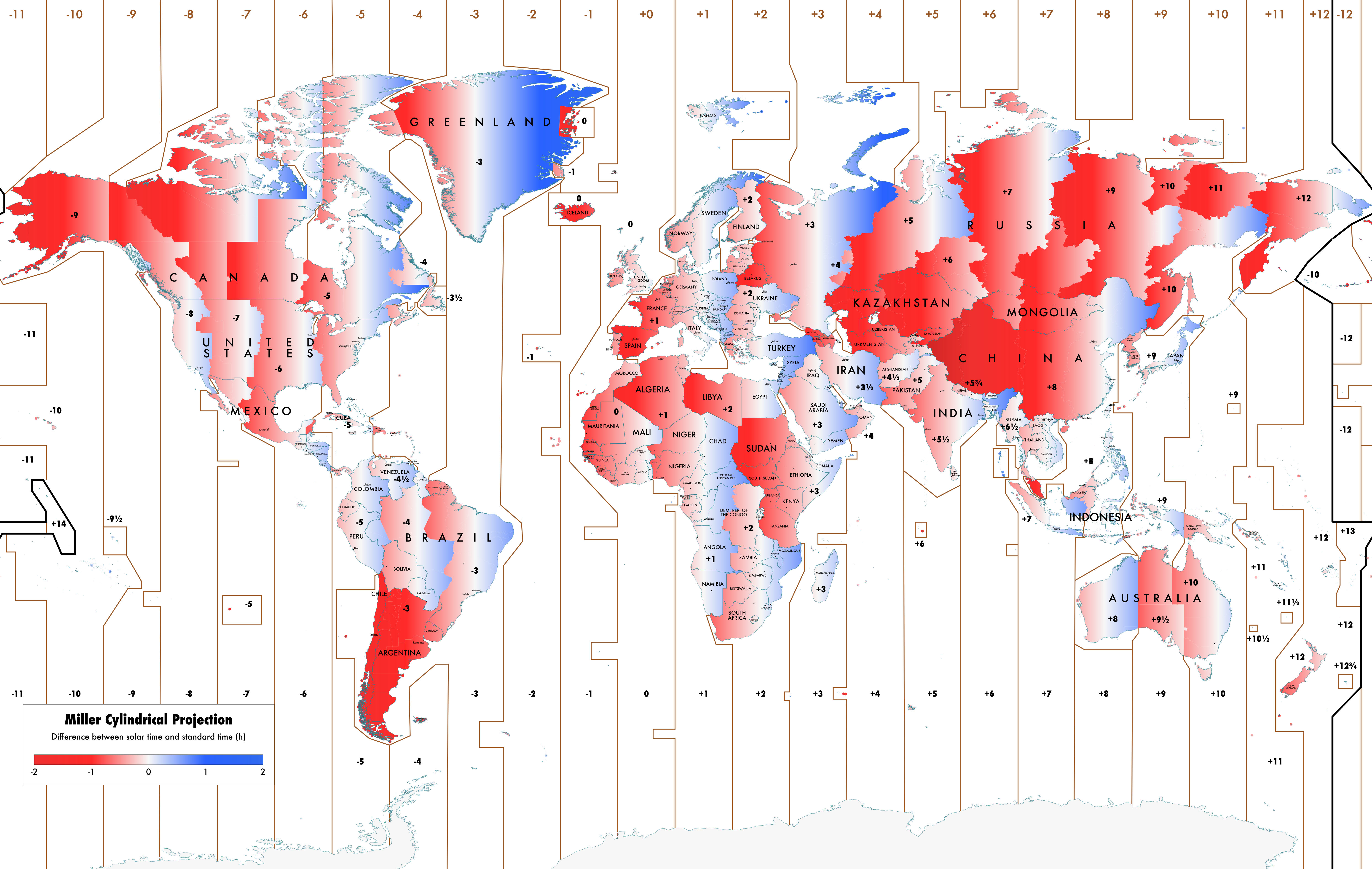
As seen on a solar map [1][2] Germany isn't even particularly badly impacted by this issue compared to say France or Spain. There's some truth to the saying that Germany basically runs the EU, but as results like this show mostly because they seem to be making an effort to give a crap about it and its policies.
1. http://blog.poormansmath.net/images/SolarTimeVsStandardTimeV... (source: http://blog.poormansmath.net/how-much-is-time-wrong-around-t...)
Moreover from an IT perspective it would be convenient if we don't pick permanent Daylight Saving Time in that the UK would effectively always be using UTC.
In the French poll, 2 million answers were given and 84% were also in favor of ending time savings, 60% wanted to keep summer time rather than winter time. For some reason, people often take France and Spain as examples of countries that would be badly impacted by a decision "taken by the Germans", but France and Spain are very much in favor of staying on summer time.
I don't know if the BBC is trying to push the idea that the decision is somehow undemocratic, but most countries in the EU have had consultations and as far as I know the results were in favor of giving up time savings everywhere.
Either you're mis-recalling that "2 million" number for France, or very coincidentally there was some poll specific to France whose result in France was exactly the same (84%) as the one the Commission conducted across the EU.
In any case, whether citizens in specific EU countries participate in polls held locally or held by member states isn't relevant if we're discussing how much citizens in various countries directly engage with EU institutions.
Would you like to go to work in the light or in the dark during winter time?
Would you like to have some daylight while having barbecue at 9pm in the summer.
...
(My concern is that people had no idea of the practical consequences beside sucks-to-have-to-get-up-one-hour-earlier and will be in for a rude awakening)
The only _practical_ consequences of DST vs non-DST lie in whether we try to force everyone to shift their schedules all at once twice a year or leave it to individuals and businesses to set their schedules as they see fit.
There are no practical consequences for permanent-standard-time vs. permanent-summer-time. Either way, people will adjust their schedules to suit local conditions just as they do now, but without the complication of abrupt time changes in the spring and fall. My preference would be to place local noon as close as possible to solar noon (+/- 45 minutes, to permit one-hour time zone offsets without splitting up dense urban areas) so that morning and afternoon are approximately the same length, but I wouldn't call that a _practical_ difference, as long as the offset from solar noon is consistent. It's more a matter of aesthetics, in particular a distaste for needless complexity.
That might work for an office worker but beside these?
DST really factors in quite well for night owls like myself. I'm aware there is a strong degree of detraction in terms of complicating time keeping and body clock adjustments.
It makes the daylight stretch into what we conventionally consider the night. In the winter, I'm always somewhat a little sad that the sun sets before I even leave the office (~4-4:30pm), but I'm always in a much better mood in the summer when I leave the office at 5pm and still have hours of daylight left in the day.
   ....................*****.....
   .................***.....**...
   ................*..........**.
   *.............**.............*
   .**..........*................
   ...**.....***.................
   .....*****....................
   ..............................
   ..............................
   ..............................
   ******************************
   ..............................
   ..............................
   ..............................
   ..............................
   ..............................
   ******************************
   ..............................
   ..............................
   ..............................
   ..............................
   ..............................
   ..............................
   ****..........****************
   ..............................
   ....*********.................
   ..............................
..............................Yeah, that's a cynical take on the class orientation of HN... (I don't get up at 5 and never ever reach the office before 10:30 myself).
Or is it "just" a timezone library to update and voila?
The challenge is actually getting that update pushed out to everything that needs it. Every embedded and IoT device needs to get a new tz database, and any applications that might use a different tz database to the system one need to be updated. It's not significant programming work necessarily, but it's still probably going to cause a significant number of bugs in reality.
> which extends daylight hours
No, it doesn't. The number of daylight hours is exactly the same no matter what your clocks do.
All DST does is force everyone to change their schedules so that they wake up earlier, go to work earlier, come home earlier, and go to bed earlier. It effectively forces businesses to open an hour earlier and close an hour earlier because of society's expectations.
When you describe it this way, the entire process sounds like something that takes place in a totalitarian state run by a crazy person. Yet here we are as a group claiming it somehow helps farmers (it doesn't, it makes things more challenging for them). The only people who truly benefit from DST are golfers (and golf course owners) who can leave work an hour early and get in a few more rounds.
Which is by far one of the most accurate description in this community.
> the entire process sounds like something that takes place in a totalitarian state run by a crazy person
It's due to the way the Universe works, it only requires a review of your early school notes about science / geography / astronomy.
DST is a way to compensate that "strange" behavior for the current definition of a "time-zone".
Is DST good ? it depends because we over-generalize the definition of a "time-zone" by taking in consideration only the longitude, but not the latitude. (and above/below certain latitudes, nothing can be done)
Is DST good for EU (or North America) ? Mostly yes if you take a closer look at the year-round daylight charts for key geographic coordinates.
Extra notes while here:
1) "EU propose to get rid of DST", its our best interest to keep it; don't let some incompetent rule such a thing because he/she doesn't really know how it works but only how it's perceived.
2) "If I have to choose, I prefer more daylight in the evening": fine, but that is out of scope from DST; it's about changing schedules. Clock should (I'd say "must") stay on their natural "time-zone" for the sake of coordination and travel.
quote:
"Consequently, the Commission proposes to discontinue the seasonal time changes in the Union, while ensuring that Member States retain the competence to decide on their standard time, in particular whether they will move to the standard time corresponding to their summer-time on a permanent basis or whether they will apply their current standard time permanently. "
https://eur-lex.europa.eu/legal-content/EN/TXT/PDF/?uri=CELE...