Is everything made in China uniformally disastrous for the environment?
I was under the impression the easiest way for people, who live in developed nations, to reduce emissions is to eat less meat?
And yet the total CO2 contribution of the world-wide aviation industry is 'only' 2%.
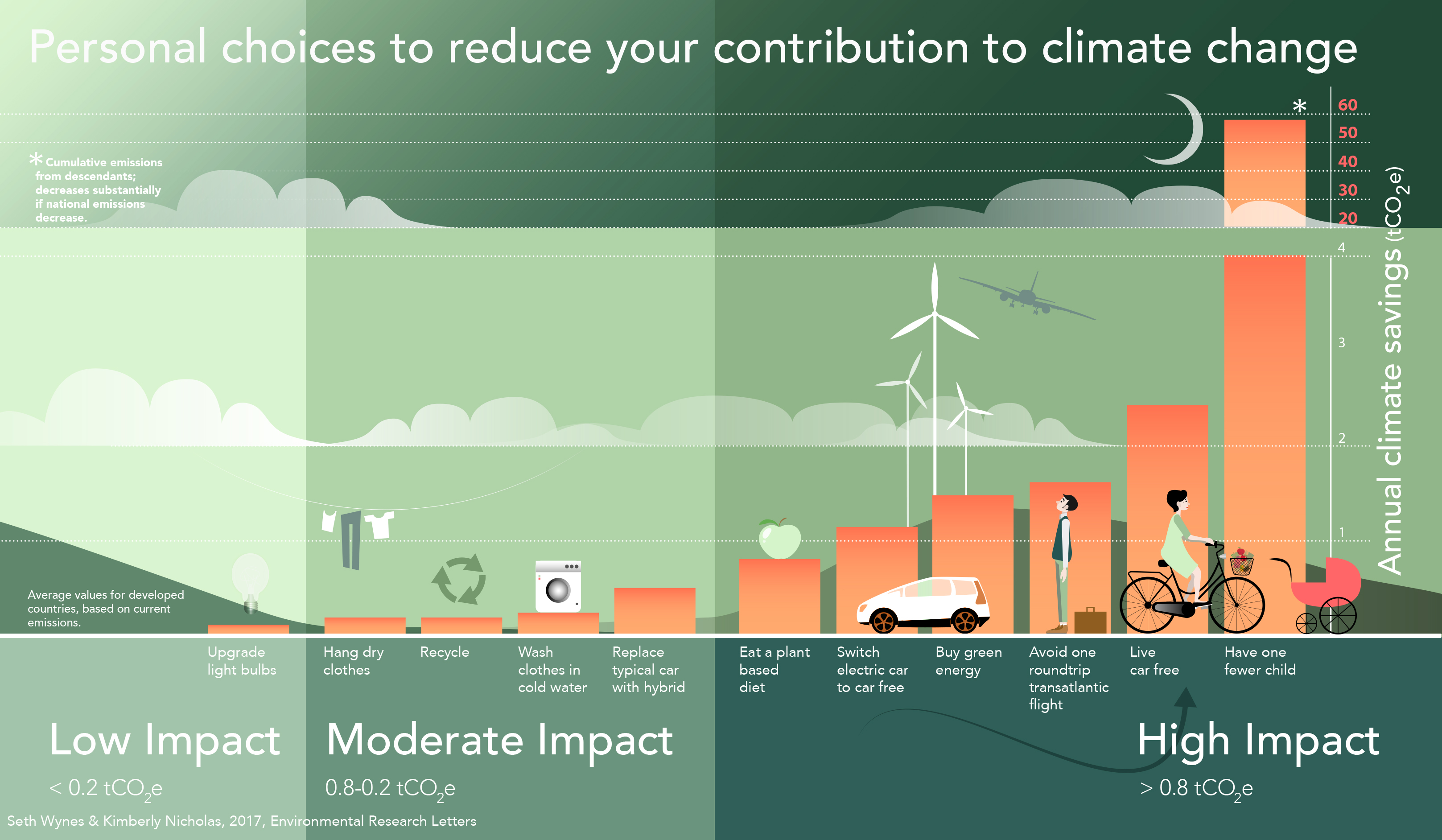
Based on that chart I would say having (more) children is by far the worst culprit. By now I'm really 100% convinced that the only way to save the earth is if everyone everywhere around the globe stops getting more than 2 children per couple, preferably not more than 1, so the world's population can shrink down back to somewhere around 1/10th of what it is now.
I'm 100% serious about this, and it makes me sad and angry nobody is actually really talking about this. Nothing we can do like eating less meat or skipping a holiday will help if the world's population doesn't shrink by a significant factor. It's a very unpopular opinion to have, because everyone likes children, they are the future, they are god's gift, it's a human right to make babies, bla bla, etc. But reduced to cold hard facts, there are simply way.too.many.people.
Yes I know this would absolutely kill our debt-based economies and probably significantly reduce the standard of living in many places, at least in the short-to-medium term, but that's a different topic. Completely destroying the earth will have much worse effect on the economy and standard of living anyway.
Well in some parts of the world people are already having less children. Even in Africa and Asia the birth rates are going down as people (women in particular) receive higher levels of education. So much so that in a few European nations the governments are actively encouraging couples to have more children. The most recent one I heard of is Hungary. I think the same is happening in some of the Scandinavian countries. In the far east (Korea if I'm not mistaken) there are even university courses on dating. In some of these places (Hungary in particular) the preferred approach is increase the birth rate as opposed to encouraging immigration to the country.
However, the contribution of children in the chart we are referring is dubious. The number is so high that I once googled and found what I think to be the original source. (A couple of swedish researches IIRC.)
They counted the children's and their descendants contributions and assigned them to parents for ongoing year.
There are many problems there. For example if the birth rate would be calculated as 2, the contribution would be infinite.
Also counting multiple generations is problematic, because if climate change is not mitigated within one generation we could be in for Mad Max * Water World.
https://en.wikipedia.org/wiki/Environmental_impact_of_aviati...
I also read somewhere that propeller based airplanes flying lower in the atmosphere would be better option for short haul flights.
The effect over time or not using rentals/other people's cars maybe?
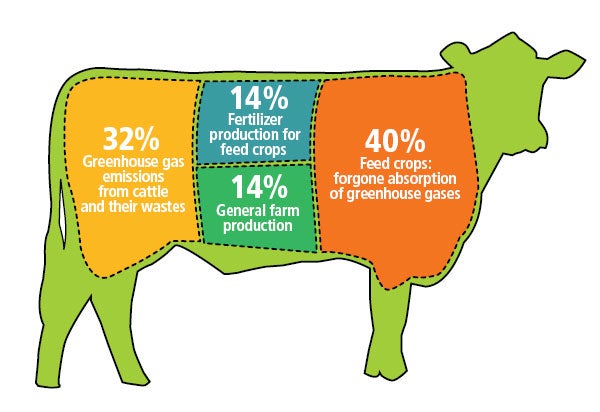
Beef however is one of the worst conversion methods in this regard, but animals like chickens and goats are quite efficient.
Shrimp is nevertheless popular however. We simply remove the parts for which we have cultural reservations.
So, where can I get insects that have been properly prepared, just like shrimp?
In addition, the amount of extra work for processing crickets made the project less than optimal at least for a small operation.
Buy less products overall.
> I was under the impression the easiest way for people, who live in developed nations, to reduce emissions is to eat less meat?
The most effective thing is probably less carbon intensive transport (that means first and foremost flying). But less meat (or better no meat) is still among the more impactful things.
The cheap "fast-fashion" these days has a hidden cost you don't pay directly. And its HUGE.
The majority of people do not fly multiple times per week.
Having said that, I do agree with the main thrust of your comment: consume less.
http://www.greenrationbook.org.uk/resources/footprints-air-t... seems to disagee. In fact, driving a typical car for one year produces less CO2 than one long-distance flight per passenger.
That is... not exactly confidence inspiring. It may very well be a statistical fluke and the reality is much less reassuring.
Not saying we shouldn't research in that direction, but this looks way too early to be confident in it.
[1] https://animalscience.ucdavis.edu/news/research-led-ermias-k...
Making huge amounts of overly cheap shite that doesn't last, or do the job properly is especially disastrous as it encourages waste.
Shipping huge amounts of stuff around the globe is disastrous.
Making stuff in places that don't yet have mature and tight environmental protections is disastrous. (Probably a significant reason it moved there in the first place)
I'd pay more for a MBP or another Thinkpad made in Greenock (where IBM used to make them), or anywhere in the EU. I'm in a minority so small it may as well not exist in wanting locally made stuff. For most stuff, I try not to buy at all, but I can rarely choose local any more.
Suppliers tend to cluster where manufacturers are, and import specialist parts. Of course as you just posted in the other comment, CO2 taxes reflecting the full environmental costs would tend to encourage more clustering, more local production, and generally buying less wastefully.
As popular as plague no doubt, but stuff needs to get expensive again. Perhaps better to say "expensive enough".