The counter example to these companies are the ones that quickly raised capital to dump scooters on public streets before they could be shut down by cities. None of the players were able to grow large enough to have a say in the reforming of the laws that regulate them (SF learned its lesson from Uber and moved quickly, limiting their participation to asking for proposals).
This is framed to present a VC as "missing out" in the financial sense. Ultimately a VC is liable to its capital partners in far more ways. If Airbnb had all of its assets seized by the federal government as an illegal enterprise (just as an example), we would be applauding their foresight and brilliance in avoiding this otherwise lucrative opportunity.
I find corprate overrule of law for 'benefit' of the consumer facinating, but dont have a dog in the fight. But I can't help feeling its like shooting the moon in a card game. It only works when unexpected, and already on a roll.
> The counter example to these companies are the ones that quickly raised capital to dump scooters on public streets before they could be shut down by cities.
I live in NYC, and I’m frequently in Westchester (the county immediately north of NYC, for those not familiar with New York). There’s been a large influx of Lime bikes in the past several months. My opinion on Lime - the bike/scooter company - has quickly evolved from idle curiosity, to weak dislike, to outright disdain. That evolution started happening when I saw Lime bikes being parked in arbitrary places that blocked pedestrian foot traffic, but I think the straw that broke the camel’s back was when someone parked a Lime bike directly in the spot I usually place my garbage.
Sometimes the hustle of skirting regulation seems to be a net positive. Company culture notwithstanding, I’m happy overall that Uber exists as a concept. I don’t have a savvy opinion about their future, but I enjoy Uber rides significantly more than yellow cabs. Likewise I’ve stayed in Airbnbs before and enjoyed the experience, though I wouldn’t say it’s changed my day to day life as much.
But other times it seems like companies are being actively negligent in their awareness of the legislations they’re flippantly ignoring and the consequences of doing so. I don’t have a lot of sympathy for a system being disrupted which depends on the artificial scarcity of taxi medallions. On the other hand I find it very frustrating when my sidewalk or park is “disrupted” by a random bright green bike that yells at you if you try to move it without paying.
I wish there were a way to easily categorize the behavior of companies - between those whose cavalier approach to disruption mostly impacts existing incumbents, and those whose approach is actually a pain to end users. Sometimes the laws are legitimately outdated or very inefficient, and disregarding them vastly improves the user experience. But other times - like with Lime - it feels as though companies are pointing to those examples so they can get away with a “product” that automatically opts you into a “new normal” just because a subset of people use it.
Lime's disruption did not change the artificial scarcity of public space that isn't dedicated to cars.
Public space in the NY metro area is largely devoted to car driving and car parking. An Uber car can tap into this vast resource, but a Lime bike cannot. Things that are not cars are forced to compete for the scarce non-car space. This includes pedestrians, Lime bikes, and garbage bins. Note that Uber is only significantly controversial in places like Manhattan, where car-dedicated space is most scarce.
I think this is part of why these two types of companies have (mostly) fallen on opposite sides of public opinion.
Granted that's a problem and hopefully they're working to discourage bad behavior. But traffic and pollution are bigger problems that bikes and scooters help with. Does the fact that they're sometimes misplaced mean it's a net negative?
Not sure if they're winding up in other towns nearby (inevitable, I guess), but in this case the city was totally on board with them showing up!
We don't throw our trash bags out in the street but put them in larger containers. Can't park a bike on those.
Is this spot on your property?
It also makes sense to do this in areas where no one is watching. For example Monkey Parking got shut down almost immediately during the same time SF was probably at it's height of negotiating what it was going to do with Airbnb rentals in SF. https://www.wired.com/2014/06/app-that-lets-users-sell-publi...
Also, Airbnb, like many other companies who tout "growth hacking", illegally (in the eyes of the craigslist ToS) used a technique to basically leverage Craigslist audience to grow their own.
Mind you, this technique is also being encouraged by a partner at one of the most prominent VC firms in the valley. https://andrewchen.co/how-to-be-a-growth-hacker-an-airbnbcra...
Point is - it's very easy to blindly select what you feel is "right" vs "wrong" or "bad" vs "good"[0][1] when your money is on the line.
FWIW, had you made the same comment a year ago, I'd have only seen Uber, not Airbnb, matching precisely the model you describe. The lore was (and perhaps still is) that Airbnb has a platform substantially different & far better than Uber (e.g. http://archive.is/kE5hq). MSM painted Uber as this ultra-aggressive startup in terms of both company culture and taking on regulators; meanwhile Airbnb was just this wholesome startup simply trying to help student's travel on a shoestring budget and helping people pay rent by letting someone sleep on their couch.
Anyway, that was my interpretation back then; but clearly I'm no Paul Graham. It's clear from his blog post that Paul never saw it this way. To him, Airbnb was always destined to be a platform that disrupted the hotel market. Of course if you're going to 'disrupt' the hotel market in any medium-to-large city, that means thousands of residential homes will need to be converted into short-term vacation rentals.
It was either a carefully planned timing, or merely circumstance, but Airbnb has scaled at exactly the right pace to (like you mention) "become large enough to get a seat at the table when the regulations are reworked". And unlike Uber they have powerful/wealthy friends who piggyback on the Airbnb platform. It seems like almost overnight Airbnb went from an airbed in some student's loft to Corporation-Owned-Whole-Home-No-Host-punch-in-a-pin-code-to-open-the-front-door-fully-automated "STRs".
Living in San Diego I couldn't hate it more. After city council passed a regulation to limit Airbnb's to primary residences (which I believe most SD residence were happy about), Airbnb & HomeAway, and other parties formed a coalition, and hired a bunch of people to gather signatures to skirt our city council's ruling and put this action on a ballet as a referendum (http://archive.is/Yf6GP). In theory I'm not opposed to voter referendum; but here is a case where Airbnb is clearly undermining the ability of our elected official's to govern our city. The voted regulations will now be put on hold until 2020; and there will be nothing but carpet-bombing adverts for the next two years brainwashing san diegans. There's no hope.
How quickly we forget... There were huge inefficiencies and Uber was an order of magnitude better than what we had.
Getting a taxi was difficult and unreliable. Ask anyone who used to use them in SF. Uber was like magic in comparison.
It didn't make that much sense apart from protecting holders of medallions for it to be illegal to pay someone for a car ride, but I would actually like there to be laws protecting guests and innkeepers, and preventing the apartment across the hall from turning into a hotel.
Edit: actually, for anyone wondering, the law is that a >50 employee's company should document it's own recommendation about how not to harass your colleagues during out-of-work hours. When fully applied, the worst case scenario would be that, as an employee, you can officially (ie. under a legal base, not legal right, but IANAL) ask your employer to have workaholic colleagues to step down on their out-of-hours emails. Nothing more, nothing less, very very far from "in France it's illegal to send a work email outside of the working hours".
For my part, having lived much of my adult life in New Paltz, AirBnb has greatly increased the availability of NYC housing for me, as I typically only live in NYC for 3-10 days at a time.
I can understand that, if your desire is to live there perpetually for years, you might have a different perception.
Perhaps living in a single place in perpetuity (especially near the center of a major metro/cosmopolitan hub) is just not as sustainable in an environment where smallish organizations like AirBnb (or the decentralized versions to come) can easily subvert statutory attempts to force a particular market outcome.
Also, in NYC in particular, the role of "rent control" is worth taking into account.
You mean like 99% of people? When you work in the city, grew up in the city, have met almost everyone you know in the city, to then be forced out of the city because people want to rent their apartments out for 3-10 days at a time instead of 1-3 years means that people who need the stability of a permanent address now have to either shell out much more cash than a land lord can get (illegally) on airbnb, or move out of the city and abandon the thing they have known their entire lives.
I'm not saying I have a good solution to it, other than the typical protectionist idea of tax the things that are destroying us, but at least that way there is money in the treasury to try and save a portion of the people affected by it.
I'd wager that anybody who suddenly had an illegal hotel running out of her neighboring appartment will very strongly disagree with that statement.
Unless you personally made that experience, in a house where parties live for 30 years+, you are not aware what a massive impact this can have on your quality of life.
Since I've been there I stopped using AirBnb, period.
That's not living somewhere. That's visiting.
Christ. Hotdesking for houses. This is already the reality for a lot of precariously-housed or non-street-homeless people. It's especially bad for children and will cost them grades at school when moving frequently.
1) Tourist tax on all hotel rooms, including AirBnB. Initially a fairly small amount. https://www.theguardian.com/uk-news/2018/jun/27/edinburgh-le...
2) For whole-unit owner-not-present lets, require planning permission for change of use. You wouldn't be allowed to run a woodworking business in your apartment that inflicted noise on your neighbours, so the same should apply to turning it into a hotel.
3) Keep upgrading the transport infrastructure. The newly rebuilt Border railway is a victim of its own instant success - someone should start the process of widening it to two tracks immediately so it'll be ready in 20 years. And so on.
(Before someone says "build houses", there is a lot of family home construction going on in the outskirts. It's the historic centre that's under consideration, and "demolish the existing 4-6 story historic dwellings and replace them with much taller residential buildings" is an absolute non-starter)
It seems there was already a marketplace for short term vacation rentals....
The only thing technical were that the sites usually had a calendar, but it was impossible to tell when and if it had actually been updated, so you had to be in contact with a dozen property owners to find a place with availability.
These services showed the potential but were little more than a collection of classified ads.
Not sure how VRBO's mobile presence compared to Airbnb when Airbnb started gaining traction but that could be a factor?
Whatever you think they are missing, there is actually already a site for that.
> But I am not sure they can take on the hotel market
Not an inaccurate assessment.
> Not an inaccurate assessment.
Not sure. I have stayed in AirBnBs on vacation in other countries and I have stayed in them many times on business, first during a conference when all the rooms were booked ( -- our admin suggested it!) and then after that was so great (we had a whole house for a half dozen team members) we almost always use it. Most people prefer it, though some prefer to have their own place rather than share, even though everyone has their own bedroom. We give everyone a choice and most people choose an airbnb over a hotel.
I assume "take on" doesn't mean "replace" but "become a significant player". It doesn't work in Manhattan nor, somewhat surprisingly does it in Omaha, but in most major conurbs its fine.
I've rented a fake room (lied about size, noise, etc. and had three honest-looking reviews) and I was talking to a rep in the US, in english. Meanwhile the host was talking to a service rep in the country i was in, in french.
In the end, the US rep promised me a credit and help. But then the France rep flagged my account. Now i could not book anything until i reactivated a credit card. Even the US rep now couldn't help me until I did that. It was a Saturday. I needed until Tuesday to validate any credit card via their statement methods. Twelve international calls later, and there was nothing they could do. at all. And I was a several-year long customer with 5star reviews all around.
Ended up on the street, with three bags, hunting last minute hotels and paying counter price. Never used airbnb ever again. The savings is not worth the risk.
It's definitely not a big thing in business travel yet, but at least part of that is because business travel is a slow market to change (partly because of expense integrations, private rate deals, duty of care, etc.) That said, Airbnb is actively trying to build out their business travel group and in theory are signing up customers. It wasn't clear to me how much of that was marketing vapor.
My general feeling is that they'll eventually be able to capture a small chunk of that market, although not as high a percentage as they will in leisure. Mostly because I don't think they can get the amount of reliable inventory that a large portion of business travelers will want. I've done more than my share of working from AirBnb/guest house/hotel, but if I actually have critical business travel, I'm taking the 1000 room Hilton over any AirBnb.
Come on! Never heard of the dotcom bubble? It was all about startups.
And people have been self funding businesses throughout history.
Airbnb did what a lot of other people had been doing since eternity. Nothing new.
2005: mobileride.com in Boston, phone-based ridesharing with voluntary cash exchange, shut down in 2006 with regulatory warnings
2006: zipcar hires some of mobileride team and enters rideshare business with shared zipcar rentals among BU students
2007: zimride starts with pre-arranged rideshare at Cornell, works with campus transportation directly to keep it legal.
2007: google rides opens as a platform for several tiers of ride hailing services, dominates the market and then shuts down in 2010
2010: Uber starts in NYC as high-end livery, not sure if they got the license or not, but tweaks business model to have many on-demand part-time drivers instead of full-time, but pays much better portion of fare.
2012: Sidecar in San Francisco allows anybody to accept rides and mobile payments but calls them gratuities instead of fare. Regulators show their will to inaction. Uber responds with massive push into taxi services, completely flouts regulation, and Zimride births Lyft to do the same. CALPERS is rescued from bankruptcy by investment in AirBnB and Uber.
https://web.archive.org/web/20000620091420/http://www.craigs...
I would like to know more.
Here are the pre-2010 VC investments: https://www.calpers.ca.gov/page/investments/asset-classes/pr...
And then in 2012, they moved into managed VC/PE through Blackrock, so it's a lot harder to trace, but... https://www.reuters.com/article/us-tech-uber-idUSKBN0EH21I20...
CALPERS didn't 'start' Uber/AirBnB, but they did make huge bets on them at right about the time when regulation was threatening their existence, and then magically they became legal.
Not to mention all of Elon Musk's companies. He may not have needed the money, but easy passage through regulatory barriers definitely secured success.
In my city which is experiencing growth, I find my AirBnB guests are often business travelers who are infulencers in their respected communities. There are some exceptions like college kids on summer vacation trying to hook up away from their parents house- but mostly business people.
I see complaints from Europeans about Tourism, but that should be a reflection on the achievements of their ancestors rather than the achievements of the current and recent generations.
Manhattan: https://urbanomnibus.net/2014/10/the-rise-and-fall-of-manhat...
Paris: https://www.parisinsidersguide.com/population-of-paris.html
London: https://www.washingtonpost.com/news/worldviews/wp/2015/01/07...
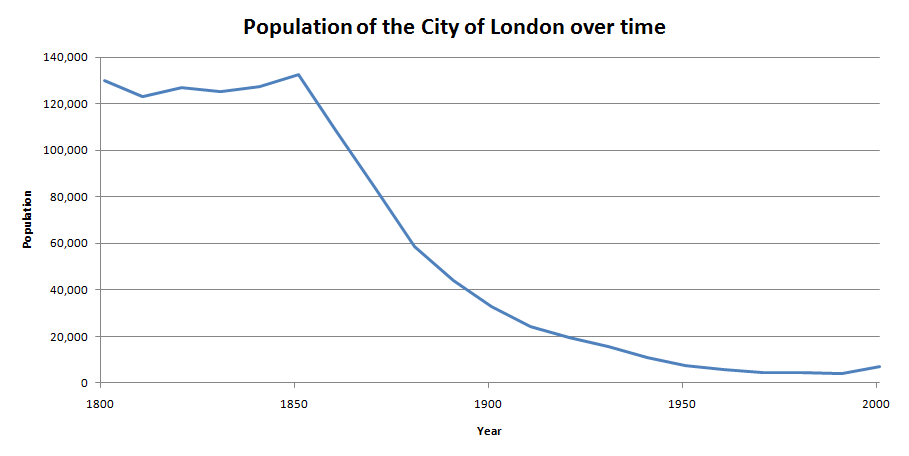
City of London: https://upload.wikimedia.org/wikipedia/commons/f/f6/Populati...
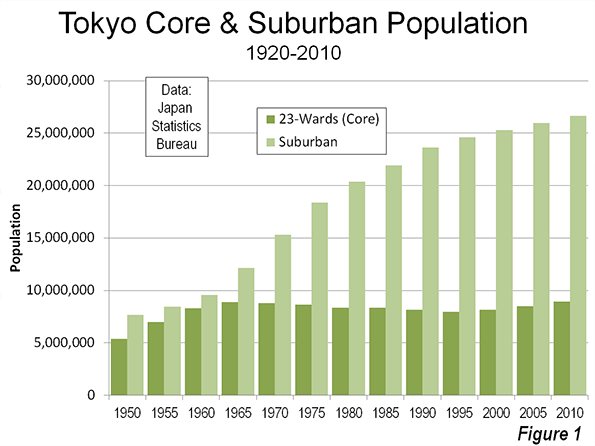
Tokyo is probably approaching peak: https://proxy.duckduckgo.com/iu/?u=http%3A%2F%2Fjapanpropert...
Tokyo Core: http://www.newgeography.com/files/cox-tokyo-1.png
Ps funny on the eBay name drop. The original marketplace model, and still doing well, but dot think vc’s reference it as often anymore.
> The three "old guys" didn't get it
I think that's the main reason why they passed on Airbnb. The VCs themselves were too far away from the initial target market, and could neither relate with the "airbed and breakfast" user base, nor see how it could scale.
From what I can tell, AirBnB has a brand and a web application. Technically, I can't imagine the latter is more complicated than the average e-commerce site delivered at scale. I am having trouble understanding how big data can create an advantage (maybe to help owners price their rentals?). If a competitor pops up, there's no reason owners can't list on multiple sites without facing any penalties.
AirBnB is not a company I'd invest in for the long term, while I would invest in Uber/Lyft. So, what am I missing?
On the other hand, Uber's network effect and synergies are mostly localized to cities. If I move to a new city and there is a competitor with lower prices, chances are I'll install their app eventually, even if it takes me a few weeks.
In San Francisco for example, AirBnB collects and remits the local hotel tax on behalf of hosts, making that a non-issue for hosts. But when I used AirBnB in Italy I had to meet the host and they needed to charge me the tax, print a receipt, and had me sign something...all which I imagine was because at the time or in that locale AirBnB had not set up that convenience for hosts yet. And in SF, they only do this if AirBnB is the sole platform you use--if you use multiple then you'd have to collect/remit taxes yourself I believe. Probably not an issue for someone who rents out multiple units and treats AirBnB as their main job, but for the little guy that just wants to make a few extra bucks from an extra couch, room, etc. here and there AirBnB navigating the tax stuff is huge.
The rest of the time, it's something like this:
  A: I've always found that business is about increasing revenue and decreasing costs

  B: I've also always thought that way

A: Great! I'm glad we're on the same pageIt's quite cool how the transcript goes to say "There's no reason this couldn't be as big as Ebay. And this team is the right one to do it."
Turns out that literally was the case! Good call Paul!