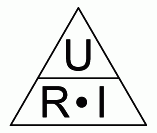
[edit] Found this: https://en.wikipedia.org/wiki/Tip_and_ring#Line_voltage
Consider Ohm's Law: `I = V/R`. Why is it so frequently printed in this way, rather than the simpler `IR = V`? If we don't care about simplicity, why not `V = I/R`? What is special about `I = V/R`?
Resistance--be it your work load or your human fleshy bits--is usually roughly considered a constant--or at least a known--for a given application. And most power sources that you'll encounter in the wild are voltage-controlled and able to supply practically as much current as you want (aka "more than enough to kill you"). So Voltage is the independent variable, leaving Current to be the dependent variable.
While it is true that "it's the current that gets ya", it's the voltage over which we have control, so we tend to focus on that instead.
Anyways, that does seem fairly self-explanatory. More volts means more current with the same resistance. More resistance means less current with the same voltage.
FWIW, I was always taught Ohm's law as V=IR (GCSE and A-level Physics/A-Level Electronics/BA Computer Science). I don't recall ever seeing it printed as I=V/R except where a calculation called for that form.
http://www.mec-castrop-rauxel.de/bilder/gru04_02.png
By covering the magnitude you're looking for, you get the formula to calculate it.
You should rewrite this, as the equation is wrong.
I don't remember the exact voltage I charged the cap up to, but it was definitely only a few volts.
So for show and tell, I explained how electricity worked, and then I grabbed one of the cap's terminals in each hand and started twitching and shaking like I was being electrocuted! Finally I somehow managed to break free, took a deep breath, and told my classmates "don't be as foolish as me."
To protect them from the danger, I then took the screwdriver blade and shorted it across the capacitor's terminals, with a big spark and a loud bang! Clearly, this cap had enough power to kill you.
I told my classmates, "Now it's safe. I discharged it. You can touch it now."
And they did. Nobody was harmed.
School was great back in those days. When I got to third grade and I wanted to etch a printed circuit board, I told my teacher I needed a tank of nitric acid, and she got it for me! But that is a story for another day.
How were you able to learn about electricity at such a young age?
I grew up on all-in-one kits from Radio Shack and was heavily influenced by my grandfather (lots of HeathKit builds, ham radio, and model railroads).
I was trying to remember my first experience with electricity and electronics, and it finally came back to me. Whenever our TV or radio went on the fritz (which happened quite regularly), I got to pull out all the tubes, and my dad would take me to the local convenience store where they had a tube tester. I would put each tube in the tester and learn what to set the dials to and what to look for on the meters and figure out which tube was bad. It was a great adventure!
73 de Mike WJ6V
"It's the volts wot jolts, its the mills wot kills."
You can have current without one or the other.
It's like saying that oxygen is the cause of a big fire, not the fuel.