Everything is available through an open API, although we don't index threat status. Perhaps we should.
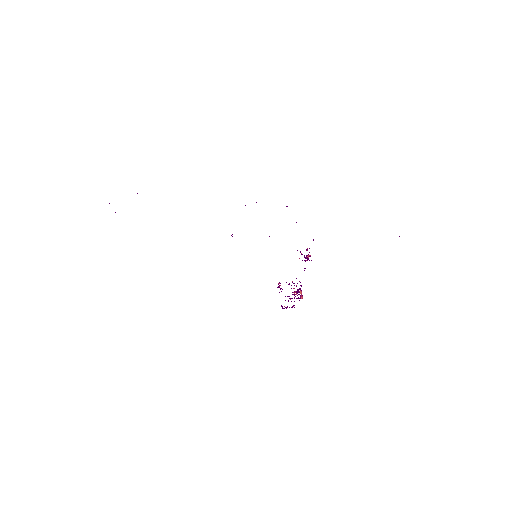
Example: Ceratotherium simum, Southern White Rhinoceros [1]. (The threat status shown on the page is taken from an IUCN API.) The distribution data is available either as individual occurrence records [2], or as a summarized map vector tile [3], or a PNG map tile [4]. You would probably want to add a year range filter for recent observations.
You can also download e.g. everything with coordinates and crunch through the data yourself.
You will often find the coordinates have a low accuracy for endangered species, to prevent misuse. I won't comment on whether making such an app is a good idea or not.
(I am a software developer at GBIF.)
[1] https://www.gbif.org/species/2440880
[2] https://api.gbif.org/v1/occurrence/search?has_coordinate=tru...
[3] https://api.gbif.org/v2/map/occurrence/density/0/0/0.mvt?tax...
[4] https://api.gbif.org/v2/map/occurrence/density/0/0/0@1x.png?...