On the other, it seems like she has developed a persecution complex with regard to Uber; since Nov 2014, every article I've read of hers that covers Uber (I'm a Pando subscriber) has at least partially been about her and her relationship with the company. Yes, the fact that Emil Michael casually floated the idea of doing oppo research on her / her family to her face is really fucked up. However, to say she's taken that ball and run with it would be an understatement. I do hope that this is actually her last Kalanick-related story (doubt that will turn out to be the case), because she's a great journalist who is tremendously good at sniffing out what's really going on, and she should be training her sights on a more diverse target set.
"Michael at no point suggested that Uber has actually hired opposition researchers, or that it plans to. He cast it as something that would make sense, that the company would be justified in doing."
https://www.buzzfeed.com/bensmith/uber-executive-suggests-di...
There was definitely more to it than just an idea
Somehow I lost my interest to read further after this phrase. To me the comparison mostly doesn't make sense. I've been Uber customer for couple of years now, and I have to say for some parts Uber, as a service, has tremendously improved my life. These other companies seem to offer quite different products/services or are in whole different markets (Didi is only China AFAIK, while Uber works globally).
At the moment uber is very useful (heck in the past fortnight I have used it in Bangalore, Helsinki and Vienna) but it does have a serious weakness - Uber competes on price but there is no evidence that it is profitable nor (far more worryingly) that it knows how it can make itself profitable.
Hence it's issue is very much similar to twitter - uber in many countries owns the sector, it just hasn't been able to find a means to make a profit from the sector.
I'm sorry what? I keep reading these sorts of sentiments, but they sound, and I know this is insulting, they sound like people who don't understand business in even the 101 sense.
As long as the margin per sale is greater than the cost of that sale, it is possible for a business to be profitable one day. Given Uber charge a percent per ride, they definitely have a workable margin (which not all startups do BTW, e.g. many of the food startups like Bento https://gimletmedia.com/episode/kitchen-confidential-season-...).
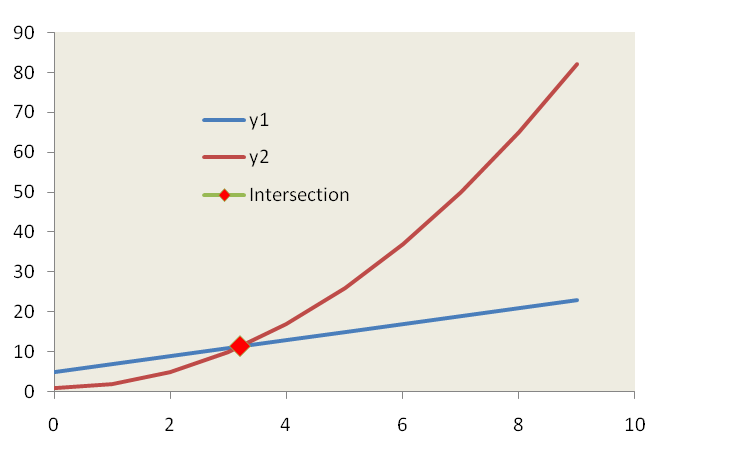
The question, for a growing business with money in the bank, is are we growing revenue FASTER than we are growing costs. As long as you are, then inevitably, the two lines will intersect at some point. http://4.bp.blogspot.com/-Yv7OoVt_q0I/UHcx99N5I5I/AAAAAAAAAZ... is the sort of graph Uber needs.
So the questions right now for Uber are: at what scale (aka total revenue) does Uber BECOME profitable with its current cost structure? How soon can Uber reach that date? And is Uber's runway long enough to get there?
I have no idea of any of these numbers, but http://uk.businessinsider.com/uber-leaked-finances-accounts-... has some "leaked" numbers. Seems in Q3 2016 they spent $2.5B and made $1.7B, so they would need to either grow by about 50% with zero cost growth, or cut about 32% of the costs to be profitable. Is that doable? How the F would I know? But I doubt that $2.5B includes many must have costs, like servers, developers and offices, and includes a F-ton of advertising and other incentives all of which are easy-ish to cut.
Lets use these numbers as examples:
* Costs: $2.5B * Margin: $1.7B * Monthly Costs Growth: 2% * Monthly Revenue Growth: 5%
If that is the case, Uber are 15 months from profitable.
That's the insane maths of startups: Revenue growth % > Costs Growth % = success.
And what about costs? If I were a betting man, I'd wager most of Uber's costs are things they could cut - advertising, non-essential staff, Given their revenue seems to growing rather well, I see no reason why there isn't a time horizon where Uber is inevitably profitable. Whether Uber has enough runway, and whether they can raise more cash, I have no idea.
Lastly, I find the idea that is floating about that Uber are subsidizing fares a really odd one. I think Uber are subsidizing things. Uber subsidize. development. Uber are also subsidizing the legal battle in certain markets, by paying for cases that will inevitably help competitors. Heck, Uber is even be subsidizing some drivers in some markets (my NYC driver told me they have some finance scheme in place to help new drivers purchase/lease cars). But subsidizing fares? They take a 20% cut, that is no subsidy!
Whether 20% is enough of a cut, and visa versa whether the fees are high enough that a 20% cut is enough raw revenue I don't know. Ditto I don't know whether Uber's runway is long enough, or if they can extend it with more funding. What I do know is all this writing Uber off doesn't seem to track with what seems to me a very sensible "build a moat by being the biggest while growing revenue faster than costs" strategy.
Mind you that isn't surprising given the continual behavior issues within uber and it's status as the biggest unicorn
The new CEO presumably won't be a co-founder with significant voting power like Garrett Camp. He/she will more likely be a "hired gun." Therefore, the next chief won't have the power to issue new stock and force every investor to suffer an early haircut. Even if the board of directors (Kalinick, Camp, TPG, Huffington, etc) agree to award some equity (1%?) as incentive to attract a new CEO, he/she still won't control enough of the company to make those decisions.
If we argue that a good CEO would convince those investors/BofD to take the financial hit, then we're still back to the decision the next CEO doesn't control: why would the BofD hire a CEO that tells them to immediately reduce their financial stake instead of concentrating on cleaning up Uber and growing the value so they never had to consider haircuts in the first place?
A boring, operations wizard. Uber is a logistics company that needs an operational wizard, not a product visionary. The bad news for Uber investors is that losing Kalanick creates a massive vacuum of power and resetting this toxic culture will be all but impossible for anyone. [...]
Uber does not need a product visionary. (Guarantee no other Valley insider will have that hot take…) It needs an operational, logistical genius. It needs a brand person. It needs a showman.