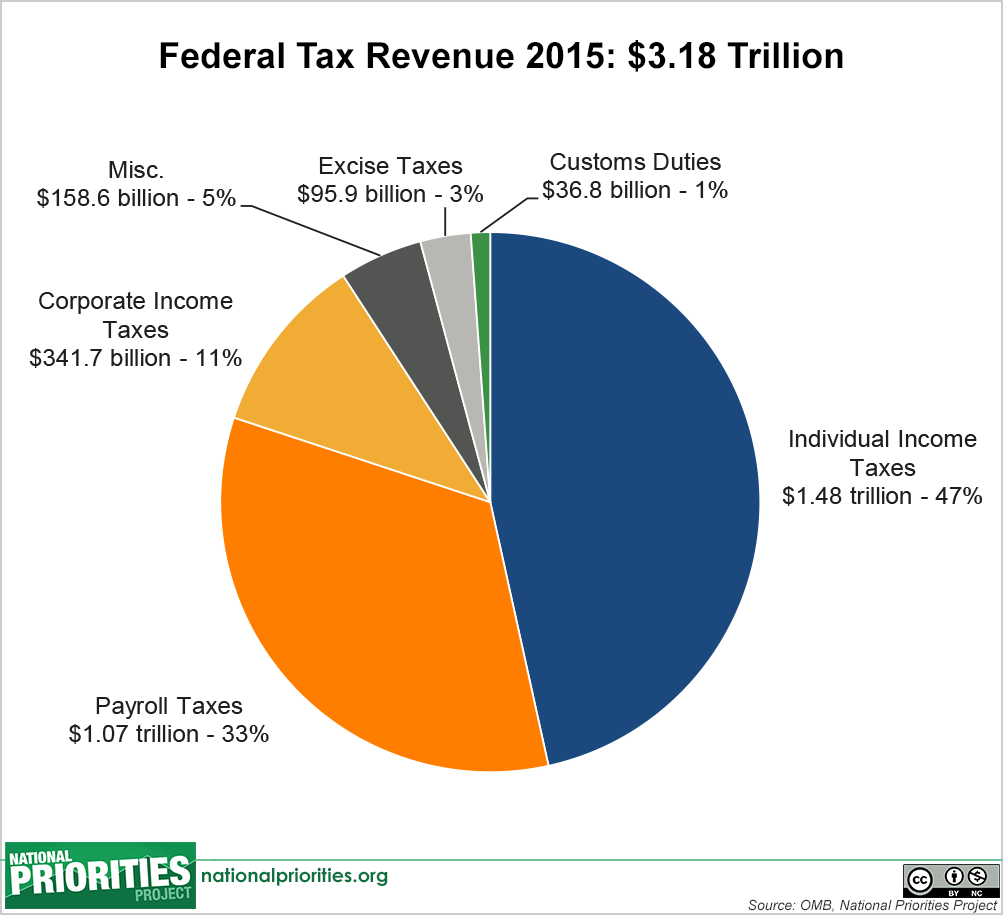
Federal Defense: ~$0.7T
https://media.nationalpriorities.org/uploads/revenue_pie%2C_...
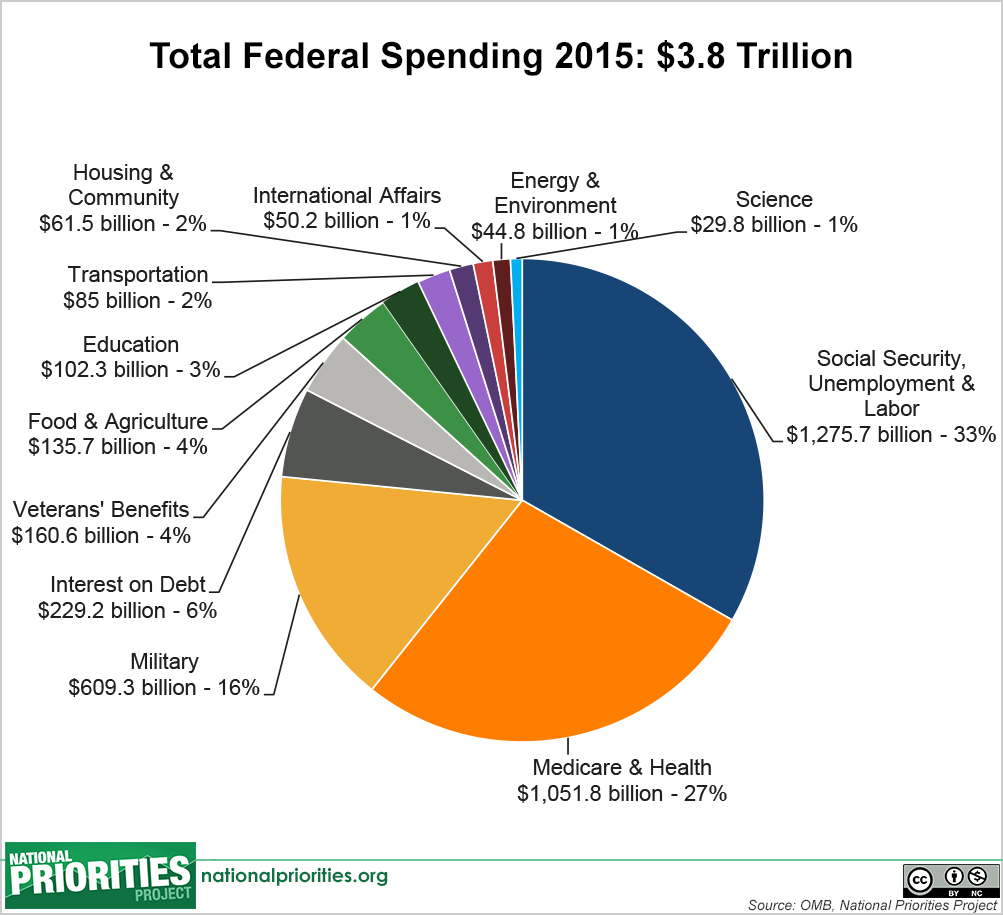
And here's a graph of federal spending --
https://media.nationalpriorities.org/uploads/total_spending_...
In theory the payroll taxes from the first picture completely cover the spending on social security/unemployment insurance -- (and this is currently the case) -- so including that category in the total federal outlays is a little disingenuous when making an argument about too much federal spending/taxation if you don't intend to cut that source of federal spending/taxation ...
If what you say is true that the issue with u.s. infrastructure is entirely the result of too much money going to federal tax authority and not enough to local tax authority -- then to make more dollars from the federal budget available for local taxation you are going to need to do one of the following in order of which action affects the largest monetary amounts:
- argue for reducing payroll taxes and cutting social security benefits
- argue for reducing federal healthcare spending
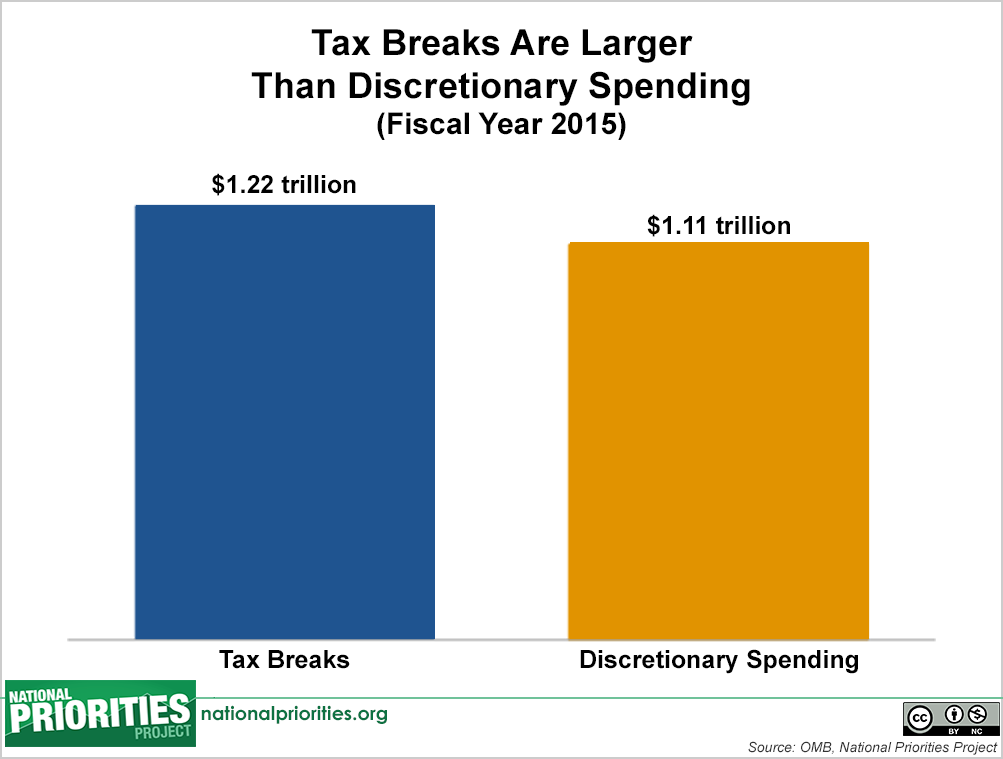
- argue for reducing tax expenditures https://media.nationalpriorities.org/uploads/taxexpenditures...
- argue for reducing the defense budget
- and then way down there at the bottom, the entire rest of the federal budget which is typically vilified as "government waste" and out of control federal spending by people who adamantly refuse to consider any of the above funding priorities when making arguments that try to scapegoat federal spending for regional management failures ...
Tax deductions are not a part of the $3.8T. If you were to "cut" "tax expenditures" with no change to the tax rate it would cause federal receipts to increase. If made revenue neutral by a corresponding reduction in the tax rate, federal spending would remain at $3.8T, all that would change is the distribution of the same total federal tax burden.
> In theory the payroll taxes from the first picture completely cover the spending on social security/unemployment insurance
They in fact more than cover social security, which is part of the problem. We have a highly regressive payroll tax -- janitors pay >15% while Warren Buffet pays <1% -- which is then used to collect more revenue than the program it ostensibly supports actually spends. The rest of the money is immediately spent by the rest of the federal government through an accounting fiction in which the government issues bonds to itself, as if the debt and the bond together could sum to anything other than zero.
> including that category in the total federal outlays is a little disingenuous when making an argument about too much federal spending/taxation if you don't intend to cut that source of federal spending/taxation ...
Eliminating payroll taxes is what we should do. Pay for social security from the general fund and let rich people and corporations pay their share.
And there is no inherent reason benefits would have to be cut to remove them from federal jurisdiction. Hand the entire program over to the states. It changes who is responsible for the problem, which allows it to be solved, because each state can make a rational local choice between different local needs.
Then you don't have inefficient decisions as a result of federal politics. Right now states like California are falling apart because they have a high cost of living, even though federal tax rates take no mind of that. Making $70,000 in California produces the same standard of living as making $35,000 in many other states, but causes the person in California to pay a higher federal tax rate and receive fewer federal benefits. The state then has to suffer or cover the benefits deficit while its people have less discretionary income for the state to tax, because a higher percentage of it goes to the feds which is then spent on other states.
That sort of interstate theft is inherent in large central governments. The people of California pay the brunt of the burden, but they aren't a majority of the federal legislature, so they can't stop it. The money goes primarily to cronies and large corporations (especially with federal healthcare spending), but there is a secondary benefit for people in low cost of living states who get subsidized by people in higher cost of living states, which gives it the votes to pass at the federal level and creates all of this waste. Wasteful and expensive programs are easy to pass because losing half the money to corruption is no impediment to passage when it was some other state's money to begin with.
> and then way down there at the bottom, the entire rest of the federal budget which is typically vilified as "government waste"
The waste isn't the NIH budget or NASA, it's in the structure of all federal spending. Social programs belong at the state and local level. Even the defense budget should be more local -- let the state-level national guard be a larger percentage of the military.
People malign the US healthcare system, but the root of the problem is that we have federal heathcare policy. It would be like trying to have a unified healthcare system for the whole EU, regardless of the different cost of procedures, income levels, cost of living or anything else between countries. It's not that Italy can't have a functioning healthcare system, it just needs different rules from the German one. California needs different rules from Alabama.
If you try to build one system that works for everybody, you end up with an inefficient bureaucratic mess that doesn't work for anybody.
Spain decentralized the healthcare system even within their state with positive results, indicating that the optimal scale for healthcare may even be at the county level.