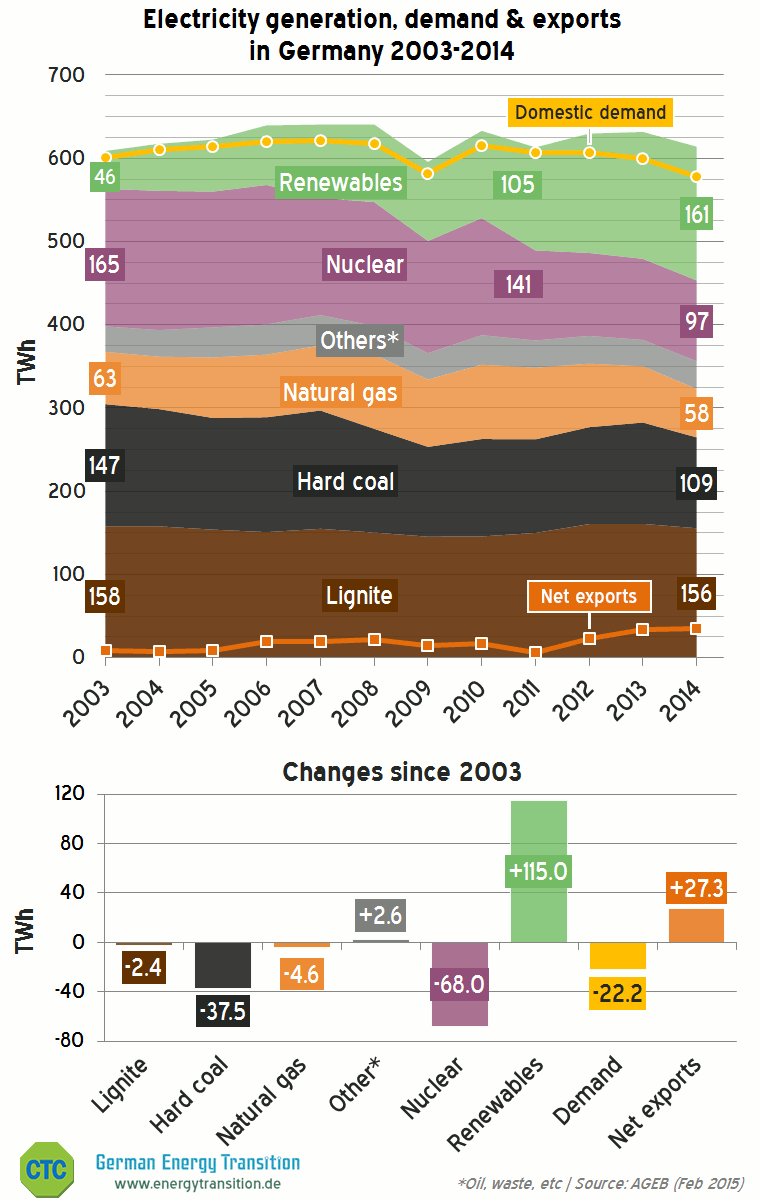
Citation? Unfortunately it looks like there are large proven reserves of natural gas:
>...The U.S. Energy Information Administration estimates that as of January 1, 2014, there were about 2,474 trillion cubic feet (Tcf) of technically recoverable resources of dry natural gas in the United States. At the rate of U.S. dry natural gas consumption in 2014 of about 26.6 Tcf per year, the United States has enough natural gas to last about 93 years.
https://www.eia.gov/tools/faqs/faq.php?id=58&t=8
It is unfortunate because for those who care about climate change, there are inevitable methane releases from fracking and from distribution of natural gas and those are now known to be much worse for the atmosphere than previously thought:
>...Back in August, a NOAA-led study measured a stunning 6% to 12% methane leakage over one of the country’s largest gas fields — which would gut the climate benefits of switching from coal to gas. We’ve known for a long time that methane is a far more potent greenhouse gas than carbon dioxide (CO2), which is released when any hydrocarbon, like natural gas, is burned. But the IPCC’s latest report, released Monday (big PDF here), reports that methane is 34 times stronger a heat-trapping gas than CO2 over a 100-year time scale, so its global-warming potential (GWP) is 34. That is a nearly 40% increase from the IPCC’s previous estimate of 25. ...The IPCC reports that, over a 20-year time frame, methane has a global warming potential of 86 compared to CO2, up from its previous estimate of 72. Given that we are approaching real, irreversible tipping points in the climate system, climate studies should, at the very least, include analyses that use this 20-year time horizon. Finally, it bears repeating that natural gas from even the best fracked wells is still a climate-destroying fossil fuel. If we are to avoid catastrophic warming, our natural gas consumption has to peak sometime in the next 10 to 15 years, according to studies by both the Center for American Progress and the Union of Concerned Scientists.
https://thinkprogress.org/more-bad-news-for-fracking-ipcc-wa...
As we use more and more natural gas, we can expect more and more methane disasters like the leak from Aliso Canyon in CA which was the largest methane leak in US history. This released over 100,000 tons of methane into the atmosphere and required 11,000 residents to be evacuated.
http://www.bbc.com/news/science-environment-35659947
>...It should be nuclear, but, sigh.
Yea, nuclear has so far been the safest form of base load power we have ever used. Unfortunately anything at all related to nuclear is covered by the media orders of magnitude more than other power sources so people have an understandable perception that it is much more dangerous than other sources of power. What if the Alison Canyon was a nuclear storage site (instead of a natural gas storage site) and 11,000 people had to be evacuated - how much would the media have covered that? Another recent example would be the evacuation at the Oroville dam - almost 200,000 people were forcibly evacuated since the worst case failure scenario would have have been a tidal wave of water 30 feet high rushing down stream. This made the news for maybe a day. I can't blame some for being afraid of nuclear power, but there are many who should know better.