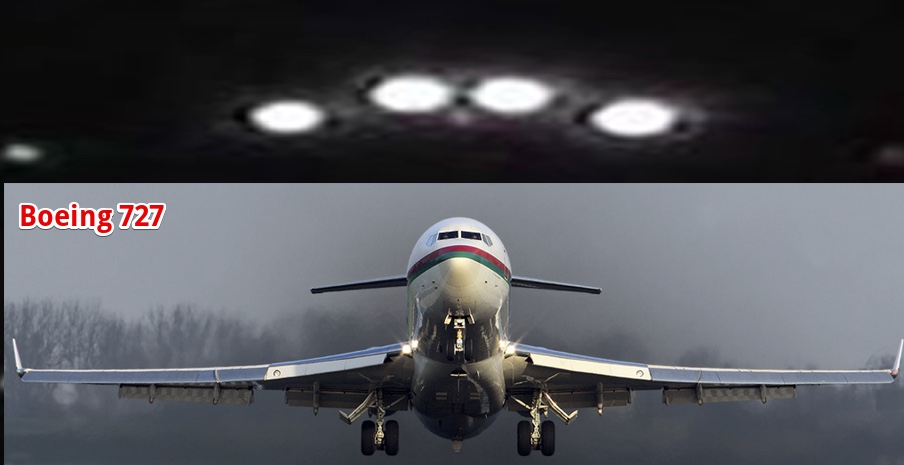
The fact that air gets deflected downward is a necessary (c.f. conservation of momentum) effect too. So it's not incorrect to do the analysis that way. But it's absolutely wrong to correct someone saying that "lift is pressure" with "lift is actually deflected air".
This is clearly demonstrated by this incident. Many tons of air deflected downwards by the A380's wings had enough force to flip the unfortunate plane below several times.
Yes it does. And those bullet impacts are the very definition of pressure.
The aerodynamics snobbery that you're trying to invoke is that those bullets also hit each other, so you can't make ideal gas assumptions and must model the whole system as a giant system of differential equations (c.f Bernoulli) if you want numbers out.
That doesn't change the fact that air pressure at the surface of the body is what causes the force on the body. That busybodies feel the need to argue against this bleedingly obvious point says some very bad things about the way the aviation community has tried to teach aerodynamics.
pushing a mass of fluid downward is equivalent to creating a net downward pressure. its the same thing, just expressed in different terms. the unit of pressure is force per square inch, for you americans. by integrating over all the area, you get the force that you are talking about.
The air "sticks" to the surface of the wing and leaves the trailing edge in a partially downward direction i.e the air is deflected downward by the top of the wing not just the bottom.
For a quick demo of this, hold the bowl of a spoon under a running faucet and see how it pulls the spoon into the stream.
If pure 'flat plate' theory was valid, then all those aircraft speeding down the runway with the leading edge of their wings canted downwards 20 or so degrees would result in the airplanes simply being pushed towards the ground and never lifting off...
And Boeing, Airbus et al would build planes with flat slab wings mounted at a 45 degree angle to the airflow, because that would give the maximum lift by the 'flat plate' theory, wouldn't it?
Not that I disbelieve that a flat slab cannot generate lift - but that it is probably a very inefficient way to generate lift compared to the standard aerofoil shape.
[0] - https://upload.wikimedia.org/wikipedia/commons/thumb/3/3b/Bo...
Proof? Inverted flight on low power aircraft and gliders.
You can push the air hard on the underside, but on the top side, you have to gently accelerate the flow downwards, or else it forms vortices and you suddenly lose a significant fraction of the amount of air you would otherwise deflect downwards.
The "equal transit time" theory that you appear to be referencing here (air over the top takes a longer path, thus it must go faster and air under the bottom takes a shorter path thus it goes slower) is a complete fallacy. There is no mechanism in physics that requires the air to "meet up" at the trailing edge of the wing.
You can read the HN discussion here [2], since this appeared on the front page a week ago, much to my surprise [3].
[1]1 http://ljjensen.net/Maritimt/A%20Review%20of%20Modern%20Sail...
Get a piece of A4 or Letter sized paper and try this experiment with it [0]. For best effect, hold both the edges closest to you in each hand and twist the front edge downwards to keep it straight and prevent the paper twisting which could inadvertently straighten it. (i.e. Not with one hand like he is doing in the video).
The Bernoulli principle with postulates the Venturi effect is about the only theory that can explain why the trailing edge of the paper moves UPWARDS when you blow across the top of the curved paper.
No one questions whether the Bernoulli and Venturi effects actually exist. But airplanes are heavy and it's pretty obvious that the Bernoulli effect does not produce sufficient lift by itself.
As proof that most of the lift comes from deflecting air, I offer the fact that airplanes can fly upside down.
Do the same experiment with the paper, but rest the trailing edge on a table. The air can no longer be deflected downwards, so the paper will not rise.
Another one to think about, at the air metal boundary the air is stationary on both sides of the wing. So why is there a pressure difference? Bernoulli's law is valid only along flow lines and is a consequence pressure difference required to accelerate (or decelerate) a fluid. Since in the laminar situation flow does not occur from the top surface to the bottom (minus around the tips), direct application is nonsensical. If you integrated all flow lines from all surfaces however, you would get the correct answer.
Extend the flaps and slats on that aircraft and I am sure the effect will be all the more pronounced.
And yes I've flown aircraft inverted too - it take a tremendous amount of forward stick to try and maintain level flight in that config to counteract the wings natural tendency to move towards the top surface.
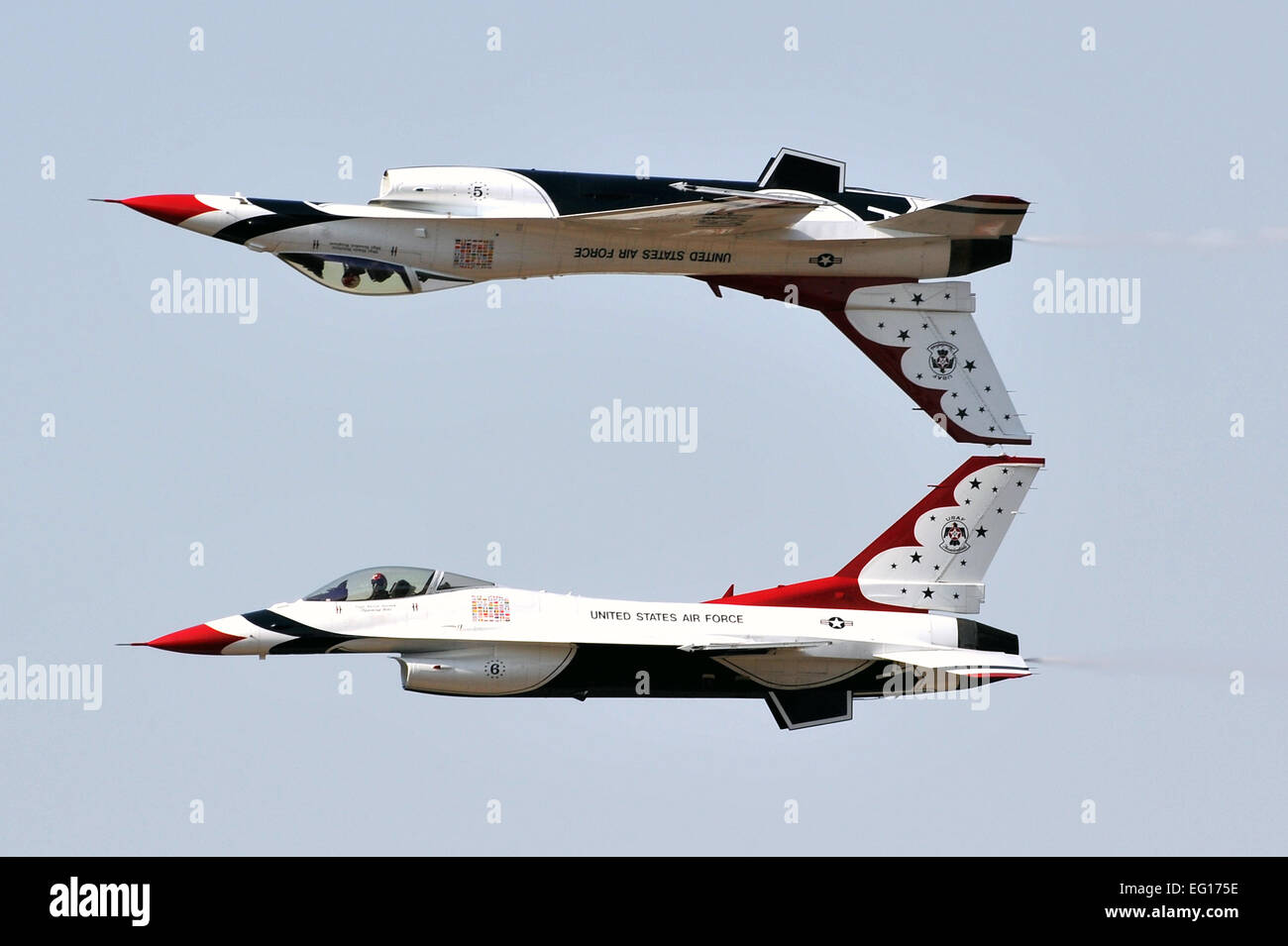
People have pointed out the "Thunderbirds" F-16s flying in the "mirror" formation [1] and not displaying much difference in AoA between the upright and inverted aircraft, but supersonic fighter usually have a straighter, almost trapezoidal shaped wing cross section rather than a curved 'fish' shape. I am willing to bet the inverted pilot has a fair bit of forward stick on though.
[0] - https://www.youtube.com/watch?v=cHhZwvdRR5c
[1] - http://c8.alamy.com/comp/EG175E/little-rock-air-force-base-a...
Hence the high pressure under the wing and the low pressure on top of the wing. The very act of 'deflecting' millions of cubic metres of airflow generates high/low pressure points. Hence at the end of the day, we could argue that the pressure differential is what is causing the lift?
Disclaimer: Not an aeronautical engineer, just a former commercial pilot.
Explanation of why aeroplanes fly to airhost: https://youtu.be/AaE9j7u3XJA?t=642
From Captain to Airhost: https://youtu.be/AaE9j7u3XJA?t=1031
From First Officer to Airhost: https://youtu.be/AaE9j7u3XJA?t=1458
Deflecting air downward is the way they create that pressure difference.