Therefore, my theory is that mid range car companies don't want to build complex designs as they will increase the price of their car needed to satisfy their tolerance specs.
It's economics and marketing, in my opinion. Car manufacturers find it hard enough to make money that I don't see them mass manufacturing risky designs that only a small number of people want to drive.
As you reduce the purchase price, you need to increase volume to ensure profits. Similarly, you want to absolutely minimise construction cost to maximise said profit.
As you increase volume and minimise construction cost, you rapidly reduce the scope of possible manufacturing techniques. You narrow down to tried and true methods of fabrication and assembly. Now the parts must be readily handled by robots, reproducably accurate between the same parts, parts must be able to swap between mating parts without bespoke tailoring (ie: the opposite to Apple's vision system to pick the right set of parts to assemble together), it must reliably assemble and stay assembled, it must be easily and quickly maintainable by cheaper labour for aftermarket cost minimisation, it must perform well in the battery of safety tests yet not become structurally complex to pass them, it must be light to minimse raw material costs, etc. etc. Deviating from this essentially adds cost, and even a small additional cost adds significant burden due to volumes and small margins.
With all of those constraints in place, you then consider a middle-of-the-park design that isn't polarising in its appearance or function to maximise market share. Thus, you converge towards a relatively inoffensive sedan shape that Just Works for all parties and still satisfies that litany of constraints on the design, manufacture and maintenance.
I feel like you've encapsulated the essence of Toyota.
In simpler terms: You can't build a "Ferarri shaped car" at the same price as an Chevy Impala because the shape is a part of the cost.
Mid-engined layouts are just a pain to do maintenance on, generally offer reduced cargo space and interior room.
https://upload.wikimedia.org/wikipedia/commons/thumb/e/e7/19...
https://upload.wikimedia.org/wikipedia/commons/thumb/3/34/Fe...
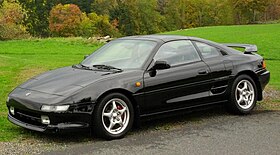
I don't know how it compares to the cost of a Chevy Impala, but it's definitely possible to get the Ferrari look on a budget, here's one example of a kit to convert a Toyota MR2 to look like a Ferrari F360 (similar kits exist for other cars):
Modern cars are apparently 'very curvy' but if you look closely you will see that the curves are done in plastic, not metal. The metal parts have relatively simple curves to them, when painted the same colours as the plastic bits it all looks good and far from 'boxy'.
As for tolerances - 'fit and finish' - there is more to it than the gaps in the panels. There has to be some tension in the panels for them to hold their shape. A bit of curve is important for this. Compare with vehicles that have totally flat panels, e.g. a Land Rover, where the panels are 'wrinkly' and far from smooth, even if fresh out of the factory.
There is also the matter of platform engineering. In the VW group the bolts that hold the engine in place are the same no matter what the model or the engine size. The Golf has dozens of same but different variants on the same 'platform' : Audi A3, Audi Q3, Audi TT, VW Golf, VW Jetta, VW Eos, VW Tiguan, VW Touran, VW Scirocco, SEAT León, SEAT Toledo, SEAT Altea, Škoda Octavia and so on...[1]
All the other volume manufacturers have the same platform based approach, the fundamentals of the car are worked out for the 'Golf' version and then after that the marketing folks and some kids with clay put together the 'remixes', e.g. the Audi TT for the 'hairdresser' market, the Jetta for the 'minicab driver', the SEAT Leon for the 'younger sporty buyer' and so on.
I believe a trip to the paddock at Silverstone is probably the best place to get appreciation of the Ferrari grade cars. The fit and finish on them is not what you would expect when inspected close up. Furthermore, the actual engineering is quite crude compared to the 'Golf'. But, if you are racing and need to fix the car between races then 'crude' is pretty good. If you are going to be rebuilding the engine all the time anyway then who cares that the bushings are primitive and prone to wear out after a few hundred miles? With the 'Golf' there will be rubbery bits mounting the engine, on a Ferrari it is bolted straight onto the chassis with no effort made to damp the vibrations, again not important if you are setting lap times around Silverstone.
Ferrari cars were styled by Pininfarina and the coachwork built by Scaglietti back in the 60's, Fiat subsequently bought the coachworks bit (as per Rolls Royce and Park Ward). Those panels on a Ferrari are very much 'coachworks' built, even if nowadays with carbon fibre composites etc. This is a very different way of building a car to the mechanical press + bits of plastic approach that mass produced cars use.
So yes, the shape is part of the cost. Personally I would prefer the 'Golf' to the 'Ferrari' and this comes down to childhood experiences of visiting car plants. The mass produced cars (MINI) fit together PERFECTLY every time. In the olden days, next to the MINI production line a smaller amount of panels were made for the Jaguar and other brands that used the same body shop for historical reasons. These panels for the deluxe cars had teams of people hammering them into shape as the tooling for them wasn't any good. They didn't fit perfectly!!! Sure the posh cars might have had leather seats and other fancy things but the basic shell was not good - 'lipstick on a pig' is the phrase that springs to mind.
As mentioned it is worth visiting 'the paddock at Silverstone' to look at some of these Ferrari type of cars close up. Also on the track. The Porsche 911 is a relatively tall and 'road car looking' compared to anything that it races against, e.g. the Ferraris, Mclaren things and what-not. Cars for the track are a very different breed to those designed for 'sitting in traffic'. Ferraris obviously have the race heritage and the track mechanical starting point, plus they are still 'coach built' and therefore 10x expensive (which is a minor cost if you are out racing).
[1] https://en.wikipedia.org/wiki/List_of_Volkswagen_Group_platf...
Seriously though, advances in composite materials science/ manufacturing techniques shouldn't put this too far off.
I have a Nissan LEAF and have owned it since new (so I know it's never been hit). Looking at the panel fit between the rear bumpers and the quarter panels, that car looks worse than some cars I've seen that have been hit.
More previous cars in this category include the Toyota MR2, the second generation of which looked extremely Ferrari-like, Pontiac Fiero, Pontiac Solstice/Saturn Sky/Opel Speedster, Fiat X1/9, Mazda RX-7, Mitsubishi 3000GT.
(Ferrari have since moved a bit more upmarket; the replacement for the 456 is the 612 (so says Wikipedia), which I think looks a bit more like a Porsche Panamera.)
http://blog.caranddriver.com/supra-man-toyota-trademarks-ico...
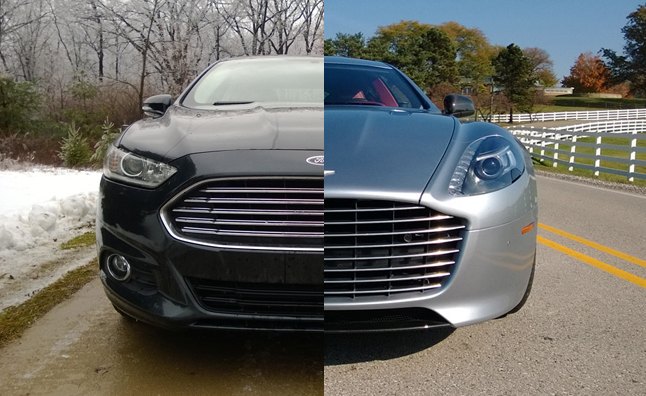
[1a] http://autoguide.com.vsassets.com/blog/wp-content/uploads/20...
[1b] http://www.autotribute.com/wp-content/uploads/2012/11/Aston-...
[2] http://st.motortrend.com/uploads/sites/10/2015/11/2012-ford-...
edit: oops, the link says it's a Ford Fusion.
What would be fun is if manufacturers took more liberties with design. I loved my Scion xB because it was "ugly beautiful" and also very functional. I really like the new Civic: aggressive yet understated. More of this would be really nice.
A Scion minivan could easily be the VW microbus of our generation.
People who have sports cars tend to have a second (or third or fourth) car because they have the funds available to afford being able to have other options available. Some Porsche sports cars are tremendous daily drivers -- a 911 Turbo is simultaneously a race car, a Toyota Camry, a snowmobile and a Bentley.
Sold Porsches in a former life. Third car was most typical, with it only being used for pleasure and special occasions. 911s were usually used most often as daily drivers, as opposed to the mid-engine cars, even though the MR layout cars have more cargo space (10 or 15 cubic feet). I'm a very rare breed, considering I live in New England and mine doesn't even have a proper roof (manual "procedure" to remove/install instead of a single button, and is always driven top down, regardless of weather).
Last year Porsche made 230K cars. In their history Ferrari have made 130K. Lamborghini made 3.2K cars last year.
https://en.wikipedia.org/wiki/Porsche#Production_and_sales
https://en.wikipedia.org/wiki/Ferrari#Road_cars
https://en.wikipedia.org/wiki/Lamborghini#Products
Porsche are pretty much a normal factory car. They have low volumes and go fast. But that is pretty much where they stand. Ferraris and Laborghinis are far closer to being hand made.
Factory made cars are more reliable than hand built cars. People who have owned these cars have told me using a Porsche for a day to day car is doable. A Ferrari or Lamborghini probably isn't reliable enough.
Many people on the street owned Porsches, Ferraris, and there were two Lamborghinis, most were used daily. But, I think there was a restriction of one car per household parked on the street, and most would only have been driving a very short distance through central London -- usually at about 5-6am, before there was much traffic.
BMWs, Mercedes and Lexus cars were more common than the sports cars, and Porsche cars more common than Ferraris and Lamborghinis.
[1] https://www.google.dk/maps/@51.488953,-0.1788157,3a,75y,230.... (take left turns, I think there are five Porsches, and something I don't recognize. But this is probably the weekend, when most of the rich people were away, and normal people "borrowed" the parking spaces. A Porsche shop is 2 minutes walk away, the Lamborghini shop about 5 minutes.)
There's a retired F1 driver who uses a Ferrari Mondial as a daily driver. That's the opposite of the concept in the op question: A Ferrari that looks somewhat more conventional, yet is a true Ferrari under the bodywork. (It was also quite a bit more reliable than its peers.)
The opposite question is equally interesting; why doesn't Ferrari produce a relatively cheap car, so that they can offer the Ferrari cachet to a broader market? Presumably as to not dilute their brand. But it means we might see such a thing if the company starts having problems (e.g., finds itself competing against superior electric vehicles or similar.)
But for basically any given designer handbag I can find dozens of bags at a fraction of the price which are largely indistinguishable from the original if you're standing across the street.
Sporty-looking cars that are low-to-mid priced really can't afford to handle like a sports car, since it is likely to be someone's main car - or back up when a car is in the shop. The expensive car is likely to be difficult to handle, especially in city driving and on the snow/ice. In addition, some of the cars perform poorly in city landscapes with potholes and speed bumps. If you've the money for the high-end car, those thigns are likely less of an issue.
In other words, the customer's needs are different with the cars. Now, I'm not an expert, but I don't think you can get the same sort of look/feel while still making it a practical enough car for the lower end market.
I drove one after having owned other Jaguars and the cheap switchgear, loud engine, excessive road noise, and poor performance put it in sharp contrast to the rest of their line.
They could have produced a car equivalent to their full-size sedans, but they couldn't have done it for that price point.
Undoubtedly part of the appeal for the corporate parent was the sharing of (IIRC) the Ford Mondeo platform, saving them the development costs of an entirely new vehicle.
The problem with that approach is that people who like a brand for the brand's sake don't want the 'Cheap' version, and people who can afford the expensive version as a status symbol don't want their prestige reduced by sharing the same marque as someone with the less-expensive version.
It's human psychology, and part of the reasoning behind 'Lexus' being a separate brand vs. just an expensive Toyota.
IIRC manufacturing numbers have gone back and forth on several lines of Ferrari more or less on this sort of need. While Enzo Ferrari was alive, Ferrari produced cars only to fund the racing team; it's probably not a coincidence that the most famous and best-selling Ferrari model ever, the Testarossa, was in production at a time when the team had no answer to the domination of Japanese turbo engines in F1. The team needed money to fight, and more and more Testarossa were made.
This said, Ferrari has been substantially bankrolled by FIAT "sight unseen" since the '60s. Things might change now that they are a public company. We'll see.
Most middle class cars are highly optimized shape wise for MPG as well as handling all types of road and weather which is why tires on performance cars look so different than middle class cars, because their goals are completely different.
Cars like Hyundai are building their own brands based on great technology, reliability, strong MGP etc. If they attempted to simply through that out the window and look like a ferrari, they would lose their core customer base and also not attract ferrari's customer base because they don't want a something lat looks similar on the outside but has lawn mower on the inside.
But then there are sports cars that are meant as daily drivers, like the BMW M5. The former CTO of Intel said he owns one and uses it as such.
https://en.m.wikipedia.org/wiki/Corporate_Average_Fuel_Econo...
Hyundai actually seemed to break with convention a few years ago and make their cheap cars resemble more expensive competitors, presumably because they didn't have anything in that market to devalue.
Costlier cars need to stand out from the ordinary. And to stand out designers come up with fancy curves, shapes etc. From a manufacturing point of view these 'non standard' items result in more cost which the mid-range cars cant afford. For example there is more wastage in cutting a curvy door from the sheet metal as compared to a standard rectangle shaped one.
It is interesting to note that as time goes by, what was fancy once eventually becomes 'standard' and the features get into the mid-range priced cars as well. Auto-shift is probably a good example. Automatic rear trunk opener is another and so on.
Is that because the high-end carmakers invest R&D in reducing costs of making these fancy door panels, which trickles down into mid/low-end cars? (I've heard similar things said for other more software-related car features like traction control or abs, but I'm interested if this is also the case for manufacturing)
A lot of high-end carmakers these days are owned by big car-manufacturer conglomerates. For example, Volkswagen owns Lamborghini, Bugatti, Bentley, Audi, and Porsche; Chrysler owns Maserati and owned Ferrari until a couple years ago; Ford owned Jaguar and Aston Martin in the 90s and 00s. So the trickle-down is really very direct: From the luxury makes of a conglomerate into the consumer makes.
So initially supplier 'A' may create a non-standard item for a new niche car. Eventually they make it available for other cars too. As more and more manufacturers pick up the 'new item' for their cars, the cost of manufacturing starts coming down as economy of scale kicks in.
The above is just one example, my point is that non-standard items cost high to manufacture, and as others start to improvise/ replicate the cost starts to come down.
First-gen Mazda Miata is the only low-end car that I know that actually looks reasonably sleek and designed (the second-gen looks like a stupid ordinary car). It's no 911, but it has a nice retro charm.
A well-designed sports car doesn't need lots of power or anything else that should be particularly expensive. It just needs to look good.
There are many answers in this thread about performance, manufacturing tolerances, undermining your high-end brand etc., but none of that should apply here.
I'm asking partly because I think almost all modern cars are hideous, but I also can't afford a 911.
I spend a fair amount of time wondering why nobody makes anything with a more bug-eyed look similar to either the classic 911 or even the classic 60s sports cars (Lola, GT40, 904, etc.). Modern safety standards and crumple zones probably have something to do with it.
(Agreed about the rest. I don't really know cars, so before I commented I just googled the various Miata generations and seem to have misread Wikipedia.)
[1] http://blog.caranddriver.com/wp-content/uploads/2015/08/2016...
[2] http://www.autoevolution.com/news/next-gen-mazda-miata-loses...
[3] http://www.moibbk.com/images/mazda-mx5-miata-black-3.jpg
By analogy, Asus (and several other brands) now makes laptops that look almost exactly like a MacBook Pro — unibody aluminium enclosure, glass screens and everything — at a tiny fraction of the price. So why won't anyone create a Porsche 911 replica that is as good-looking and as good to drive, only without the insanely high price?
I think an even bigger issue is that you can't have a car with the super-car design but without the matching horsepower. They just wouldn't sell. And if you added the corresponding horsepower you all of a sudden created something that most people won't be able to drive daily without major safety concerns, which is why these cars are in their own class to begin with. I drive a modified WRX with slightly over 300 ponies and I can tell you that when i first started driving it there were times when i'd gun it to get around someone and would just have a hard time slowing the car down. Same with taking quick turns where giving a bit of gas can send your car for a wild spin. This is why youtube is full of lambo and ferrari owners crashing their cars while trying to show off at intersections and turns beause people have no idea how to drive with so much horsepower lol
Didn't affect my Honda CRX as a daily driver one bit! (Aside from a bit more care with clearance.)
Also keep in mind that the 3 series isn't exactly for the mass market. Its price range is more like a BMW 3 series with some bell and whistles.
And before you quote 0-60 times: they are a tiny, tiny part of performance; if you look at actual racetrack performance, even the Model S P100D is miles behind a Ferrari, it's behind the top-spec Honda Civic in Nurburgring lap times. Which Tesla don't even measure nor publish, unlike all other sports car manufacturers ever. The Model 3 will be even worse off.
Come to think of it, we used to have a word for big, heavy American cars that go fast in a straight line and not otherwise: muscle cars.
Benchmarking has been on my mind this morning. I think you're pretty clearly off base here with your "tiny, tiny part of performance" comment.
0-60 times roughly reflect what people will see when they're getting on to the freeway. It's a useful exercise to contemplate how often people get on to the freeway and how often they drive around Nürburgring, or any race track.
This point pretty much holds true even among sports car owners. Guys who track their cars are very much an exception. (and for the most common case of that, drag racing, the Tesla you were putting down actually performs quite well)
Also I would argue the Mazda Miata targets this style, and I have seen a Honda car that looks quite similar to the Miata as well.
That would be the S2000. It was a bit upmarket from the Miata and remained on the market longer (10 years) than anything else that tried to compete head to head with the Miata.
In my opinion, cheap luxury clones don't work because the market is too small. Plenty of people like the idea of a 'cool' car, but the car is a big ticket item for most people, so practical, reliable and having a good resale value tend to trump 'cool' as an important feature. You'll also note that classic, 'boring' colors tend to outsell flashy, 'cool' colors. Even the best selling sports cars in the mid-price segment, e.g. VW GTI, tend to have a hatchback and a large, useful interior that is workable for a family car.
Fun fact: The Fiero was featured in the movie Ferris Bueller's Day Off as the car owned by the feature character's sister.
[1] https://en.wikipedia.org/wiki/Pontiac_Fiero [2] https://en.wikipedia.org/wiki/Volkswagen_Corrado
http://www.fierostore.com/Media/Wallpapers/Images/509_1920x1...
Once the last kid is out of house, I'll return to living the dream of a track car (+ multiple sets of tires) as my daily driver.
Middle class cars don't look like a Ferrari because the Ferrari body and look enforces some decisions on the designers and the drivers of that car. No hauling around of crap for you. Even if you manage a child car seat, the kid will be screaming the entire time when it feels every hard bounce in the road. Your body is jarred as well. It's a sensitive car that requires an alert driver. Will you enjoy having that alertness day after day drive to work and back in congestion? Probably not... You want an easy driving car with a comfortable ride and room for crap. And voila you have a modern sedan.
Edit: voila and not viola. I've got orchestra on the brain.
Something that looks the part but doesn't have the gravitas just doesn't appeal to a large enough audience.
Pantera tried to make something like a cheap Ferrari in the 1970's. It was about $10k when average cars were $3k, and a Ferrari was $20k+. It did okay, but not a spectacular success.
And, there have been a few cars that tried to look the part, without the performance, but they did about the same. Pontiac's Fiero, for example.
Basically, the people that want that look also want you to think they paid a lot of money.
The Mitsubishi Evo has been highly successful, and keeps up with much pricier cars...even bone stock, with no performance parts added. It looks like a typical 4 door economy car with some spoilers added. https://www.youtube.com/watch?v=Ees2aZcDUn8 (BBC's Top Gear: Evo on a track versus a Lamborghini)
Add a bigger turbo and these things are scary fast.
Edit: That golf below is hilarious, but wouldn't fare well on a road that wasn't straight.
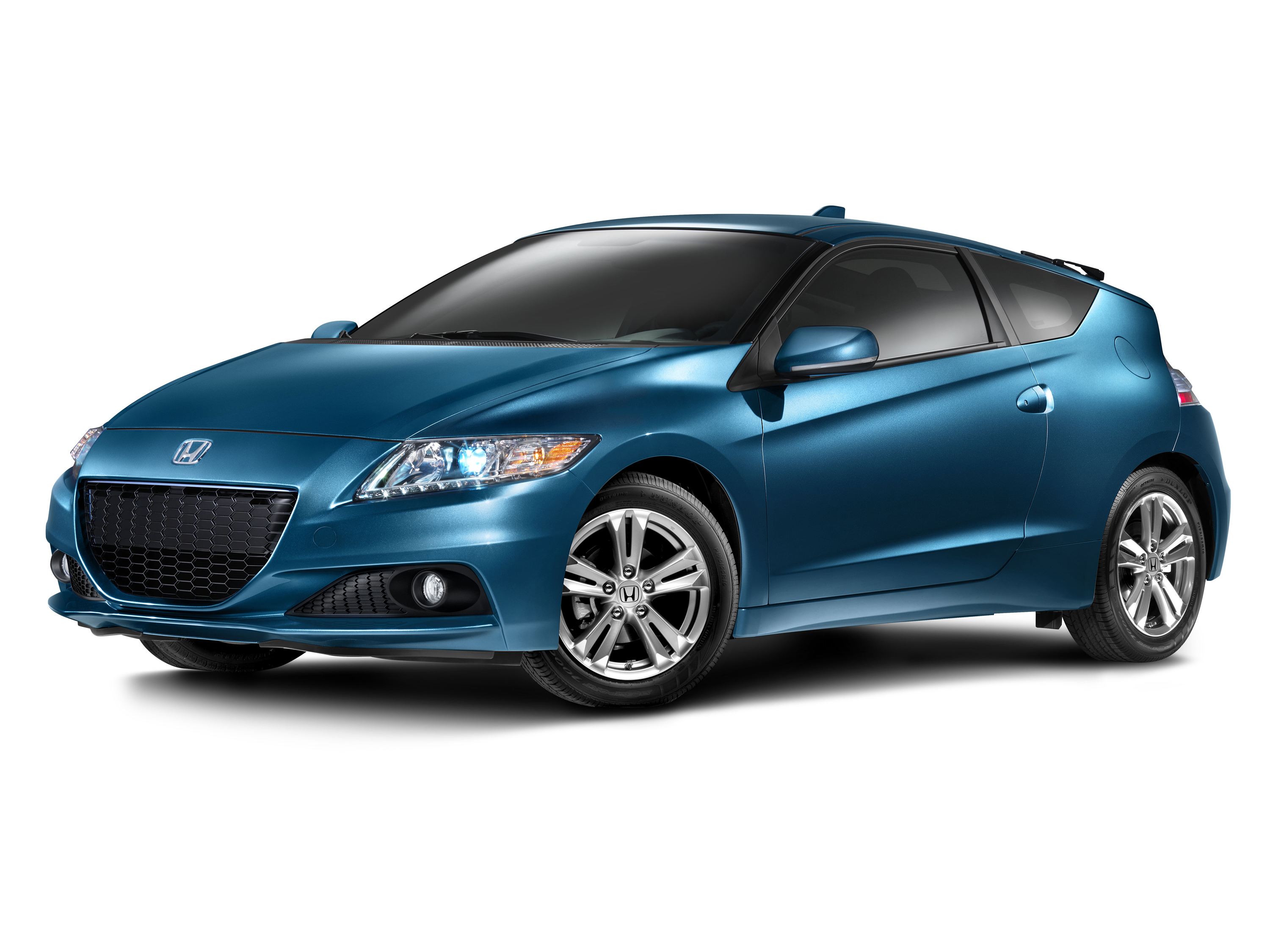
As far as models currently on sale go, I think the prize for the best-looking economy car easily goes to the Honda CR-Z [2]. Alas, as they say, its performance can't cover the checks its styling writes, which is probably why sales have been extremely poor. (You can get it with a performance package including a centrifugal supercharger, but then it's $30k.)
[0] https://en.wikipedia.org/wiki/File:1994_MkII_MR2_nbvolks.jpg
[1] https://en.wikipedia.org/wiki/File:Ferrari_F355_(8735086047)...
[2] http://images.hgmsites.net/hug/2015-honda-cr-z_100477517_h.j...
That and the Toyota/Subaru FRS/GT86/BRZ. At least a few times my heart rate has increased a bit seeing those cars at a distance (from the front). Nice to have Honda and Toyota making such good-looking cars
I think sports cars balance their aesthetics as a compliment to their function, whereas a Mazda dressed like a Lamborghini would almost feel "phony" as the aesthetic value would not be in line with functional purpose of the car at all. Thus, they are optimized for their functionality, which is to store stuff and to be safe.
You are correct...they do:
https://www.google.com/search?q=pontiac+fiero&espv=2&source=...
https://www.google.com/search?q=opel+gt&espv=2&source=lnms&t...
The new Camary actually looks desirable IMO: http://toyotanews.pressroom.toyota.com/album_display.cfm?alb...
2018 Accord also looks nice http://www.accordrelease.com/2016/03/2018-honda-accord-full-...
The new Civic hatch looks like some kind of military vehicle http://automobiles.honda.com/civic-hatchback
So, at least they're trying to make the econoboxes somewhat sexy.
More information: https://en.wikipedia.org/wiki/Trade_dress
For example, I don't know what the next Porsche model is, but I know I'll be able to recognize it when I see it because they are so distinctive.
See what happens in places where such trademark protections don't exist: http://www.carnewschina.com/2016/11/11/zotye-sr9-porsche-mac...
Nice looking car (for the time), underperformed, had a habit of catching on fire.
GM refused to budget for a new engine for the car-it never really wanted to have a two-seater outside the Corvette, but after the second gas crisis, the turkish engineer who'd been agitating for what would become the Fiero sold it to management as an economic commuter car.
The idea was to save money by using components (including the existing engine) from GM's A-body front-wheel-drive sedans, amongst others. The Pontiac 2.5L engine was too tall to fit properly in the mid-engined Fiero, and with no money for a complete redesign, the solution was to install a shallower oil pan, making the whole engine run a quart low (at least) at all times. That four was also not especially resistant to burning/leaking oil; so it was always a risk that the engine would be starved of lubricant, overheat, seize and catch fire.
I also understand that there were problems with the factory wiring on the electric radiator fans, such that airflow was never properly managed in the engine compartment, leading to... overheating and fire.
These problems were eventually fixed, but a reputation for burning up at stoplights is a hard one to overcome with normal consumers.
(I say 'normal consumers' here. Lamborghini has made many fire-prone models, but Lamborghini buyers are Not Normal.)
Thanks for this concise answer. If this were Stack Overflow, you'd get checkmark!
Those tradeoffs are to make them fast. People who drive them care about performance, and will likely have a second car for more general driving.
No one would want to buy a car that made those trade offs without getting the performance in return.
The MX-5 is fun though. It feels good to drive it at a moderately spirited pace. Several attempts to compete with it have won hands down in every significant performance metric, yet failed in the marketplace because they just didn't feel as good to drive.
There are a few intermediaries; the Jaguar X-Type is a Ford Mondeo with a Jaguar badge and some trim improvements. Personally my favourite was the Pininfarina-designed Peugeot 306 Cabriolet; it's not a Ferrari, it's an affordable sportscar that goes in at the sides and is done by the same designer.
There's also something to be said for cutting your own style rather than trying to be an imitator. People don't respect imitation. Few people want to drive a car known for being specifically for those who can't afford Ferraris.
I thought so too, but on the other hand, the success of cheap wannabe SUVs like the Qashqai shows that the "aspirational" market can be very rewarding if you can find the right balance.
It's a bit like nobody wants an iPhone-like chinese replica, but quality Android "slabs" can be very desirable.
Edit: yes it is http://www.caranddriver.com/comparisons/2017-fiat-124-spider...
I have a Corvette, which is a freaking hatch back compared to most high end sportscars.
On the other hand, a lot of supercars are mid engine (or depending on your definition of 'supercar' sometimes rear-engined) and this dictates some of the features.
Growing up in the Detroit area where literally everyone works for the big 3 or a molding plant for them, I guess I could give a little more insight...
The answer is a lot simpler. Car companies have a pre-defined set of models. A lot of work and planning goes into new models. Part of that planning is a pre-determined quota of estimated cars sold during 6 months, 12, 24, etc. if they don't feel they can hit this rather large quota, the project is scrapped.
So..to answer the question: It's because cars are built to favor the mass general public, both visually and on price-point. People have so many different tastes that it turns out this task is rather quite hard. Ferraris are a niche product, even if they were sold for $20k the Impala would still outsell it by leaps and bound (assuming a Ferrari and Impala were both sold by chevy and that Ferrari didn't have a huge luxury reputation behind it).
It's simply to appeal to the masses to sell millions of cars.
Car enthusiasts make up a small percentage of the car market, even here in America. People want practical, with a bit of badge.
And there are other really awesomely styled cars: Hyundai Veloster, SLK 55 AMG and I don't see these selling out really fast.
I think the current middle-class gearhead car is either a full-on Q-ship (it's fast but you can't tell by looking), or a sports sedan like BMW 3xx or Audi A4. Whether that is because no more hatchback coupes are sold or because customers decided to give up hatchback coupes I do not know.
Warning: pure speculation.
In general, car companies have luxury divisions. They prefer to maintain a separation between the "look and feel" of their middle class and luxury cars to maintain demand for the higher-margin luxury products.
Mazda does not, which is why they make some of the best-looking middle class cars on the market today.
The Ferrari is styled by Pinnfarina.
A mate at Ford said Pinnfarina are just too expensive for most cars.
The Peugeot 306 Cabriolet was styled by Pinnfarina[1] and it showed. Awesome looking car
The Ford Mustang was a middle-class sports car. Models are still in production. Lee Iaccoca pushed that product line forward. It was cheap to build and popular with young people. Any Chevy dealer can sell you a Corvette. Fiat-Chrysler makes the 124 Spyder, with list price under $25K.
None of them sell all that well. But they're all available.
https://www.google.pl/search?q=ferrari+lusso&source=lnms&tbm...
The only reason would be, because some people would pay to have less space. There are not a lot of people like that.
Ferrary body and a cheap car underneath
[0]https://en.wikipedia.org/wiki/Mitsubishi_GTO
[1]http://automotrends.com/new-2017-mitsubishi-3000gt-release-d...
I'm also into jeep wrangler. but I it's too fuel hungry. I wonder why they don't make a version without any off road capability with smaller engine but same body style, I would buy it.
https://en.m.wikipedia.org/wiki/Zenos_Cars#Zenos_E10S
No it's not like Ferrari but the concept seems cool. Build carbon fiber cars with Ford engines and sell for a good price. No roof or openable doors though.
Btw, an example of a 'middle class' Ferrari is the Alfa Romeo 4c.
[Actually that reminded me of a QC that my wife knew who did commute in his 456].
Google the "Fiero".
Ferrari shapes have purpose beyond aesthetic (aerodynamics are critical in sports carts), and severely limit the options inside.
- Mazda, coming up with a new RX concept
- Hyundai... no comment
   "I don't sell cars; I sell engines.
    The cars I throw in for free since
    something has to hold the engines in."
My theory, let's call it Automobile Honest Aposematism theory (AHA), in short, posits that market forces compell car manufacturers to honestly signal the quality of their cars with the cars' design and colouring, or risk financial punishment meted by disappointed consumers.
In short, producing a cheap-o car that looks like a Ferrari would cause consumers to punish the car maker responsible, obviously by not buying their product, but also these days by ridiculing the cheap fascimile in social media etc.
In the animal world, it is understood that signalling of various attributes (aggression, mating fitness etc) is predominantly honest, despite the obvious advantages of false signalling, and there is work suggesting that this honesty is maintained by punishment [1] [2] [3] (but note [5]).
There is also an alternative interpretation of AHA, the Handicap Alternative to AHA (HA-AHA) which posits that sports' cars' design is an example of the Handicap Principle [4], according to which high-cost singalling is only affordable by the truly fit, or in other words, you'll only be flash with your car designs and colours if you can afford to be flash.
The two interpretations are not necessarily competing: selling a cheap car for a lot of money to cover the high cost of its high-quality, but dishonest, signalling will very likely incur a harsh punishment by market forces.
And, er. That's AHA in a nutshell :)
____________________
[1] Evolution of Honest Signaling by Social Punishment
https://ai.vub.ac.be/sites/default/files/camready_0.pdf
[2] Social punishment of dishonest signalers caused by mismatch between signal and behavior.
https://www.ncbi.nlm.nih.gov/pubmed/20727756
[3] A socially enforced signal of quality in a paper wasp.
https://www.ncbi.nlm.nih.gov/pubmed/15538369
[4] https://en.wikipedia.org/wiki/Handicap_principle
[5] There are also examples of cheating behaviour that does not incur penalties; see Batesian Mimicry:
https://en.wikipedia.org/wiki/Batesian_mimicry
However, this is more applicable to cross-species, rather than intra-species, behaviour, unlike in the case of paper wasps where it concerns competition between members of the same genus.
I've summed up (hopefully correctly) some of the most compelling arguments here and tried to bring counter arguments. Which I'll elaborate below the list.
• Tolerances can be solved by optimization (CAD + Solver / +EA-Algorithm / +ML) @giarc
• Goal Oriented Design and Years of Experience don't hinder a great looking body and frame @heavymark @markbnj
• Outer body and frame have no such limiting influence on the interior design @dagw
• 3rd party party reliance is a thing, but you could overcome most of these price drags by using alternatives, 3d printing or self-fabrication @byoung2 anyway that's a good argument @DeBraid I agree, but altough it answers the question it doesn't feel satifying for our curiousity
• Yes, the industry's car design tools don't help with parameter complexity @garyfirestorm you are right there, sir. We need better integrated tooling and part optimizers/solvers.
• Status and Image is important, thus such gravitas have some, but it's not the deal-breaking argument @tyingq You can do it like Asus and create Apple'esque hardware at the fraction of a cost and thrive due to the price gap.
• "Because it's dishonest. You also get all the discomfort and impracticality of a supercar with none of the benefits. You just project some status until people discover what car you're actually driving." @gaze I don't understand what you mean here to be honest, can you elaborate?
Arguing with tolerances just means that the design process isn't automated or not integrated into the production process properly. Otherwisee there would be a user friendly solver and optimization tool for CAD that uses Evolutionary-Algorithms, a Contraint-Solver and/or Machine-Learning.
Simply put you can use an existing battle tested car and just change the body with a supercar alike one. This usually means also you have better and not worse aerodynamics (given that you don't blindly ignore aerodynamics just for a better looks).
And who (in his right mind) drives 300Km/h at all on American Streets? That's just unneccsary and arriving 1-5min earlier is no compelling reason for driving at such risky speeds. It's not even allowed from what I know, except in Germany (where I live), but even here we don't usually go significantly over 220Km/h for short periods of time. Thus a big enging and huge horsepower isn't even the selling point of a SuperCar per se, but it's looks and exclusivity.
Tl;Dr Answer: One conclusion I derive is that the Car Design Process and Car Production Process, altough almost fully automated, are really not well integrated and appear to lack essential, albeit usually complex to use tools like Machine-Learning/EAs and Contraint-Solvers. The Industry needs a change urgently in this area, but it's already been explored from what I know :)
No space for grocery
Can't put carseats
Additionally part of why those cars look cool is that they are very low to the ground and generally sacrifice visibility (especially rearward) for aesthetics and aerodynamics. People buying mid range cars want something more practical, even in a sports car.
The last thing I would point out is that modern affordable sports cars do have more complex body panels, lights, bigger wheels, etc compared to affordable sports cars of the past. Body construction techniques make their way from exotics down to affordable cars over time much like engine technology. But the exotics will always be ahead. That's one of the things you can do if you are targeting a $100k+ price point.





_(cropped).jpg)