On one hand, this has been a model of democracy. A primary election agenda and referendum. The phrasing of the question was simple, clear and unbiased. The "will of the people" won over the will of the ruling structure. Most politicians and the main parties (especially before the opportunists jumped in) were against leaving. So was the financial sector and most big businesses.
OTOH, some of the problems inherent in democracy were also on display. A "right to my opinion" emotional public moved by very emotional arguments. Lies, untruths and misleading truths were the most prominent arguments on either side. A majority of the discussion was stupid.
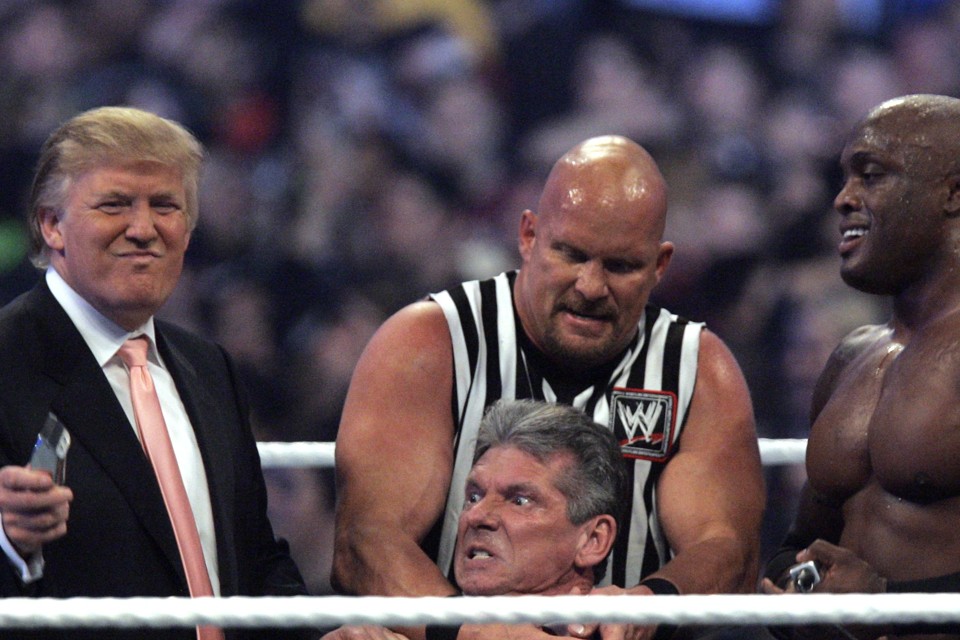
We haven't figured this shit out yet. Kings anyone? How about the best wrestler gets to be in charge? ideas?
As a Swiss citizen, I think the swiss system is very close to perfect in this regard.
Sure, emotional and stupid arguments sometimes prevail, but most of the time the people make the perfect decision. Public discourse is most often also very rational, more so than most world parliaments.
Irrational arguments have been a staple of especially the British political system. I am amazed at the low level of discussion in the UK even by their representatives.
Direct democracy is something that has to be done regularly, otherwise you end up with situations like the UK or California.
I think there's a lot of truth to this. When referendums are seldom, I believe there's a real risk of them turning into spectacle. (And at worst, a weapon for use by nationalists and fascists, like what happened in Germany in the 30s.)
When they are regular, and limited, and like in Switzerland not something pulled on a whim but actually requires some work to call, they might just work. But that also kind of assumes an informed electorate, which is perhaps the main point here – the electorate hasn't been very well informed, either way.
I also think this is something that works best on "smaller" scales - that is, not on the scale of France, or the UK, or Germany, but on the scale of Switzerland, Luxemburg, Austria, Belgium, Denmark, ...
Here in the US, I find myself wishing political discourse would rise to the level of the UK.
The only model I'd suggest that may be even better than direct democracy is liquid democracy (which is a close relative of direct democracy), but seeing as no countries have adopted it I'd say the Swiss model is the best example of how an effective democracy functions.
For those interested in learning what liquid democracy is, this is a brief introduction:
https://en.wikipedia.org/wiki/Swiss_minaret_referendum,_2009
And that was a constitutional amendment referendum!
Quite far from perfect in my view.
Mathematically, 1-(1/e) percent is the ideal cut off (~63%).
The deep irony of the anti-Brexit narrative is that the same people would froth at the mouth if you said "India would've been better off economically if it hadn't separated from the British Empire." Whether or not that's true, it's an argument--like the anti-Brexit rhetoric--misses the point completely.
http://www.thehindu.com/2005/07/10/stories/2005071002301000....
As the painstaking statistical work of the Cambridge historian Angus Maddison has shown, India's share of world income collapsed from 22.6 per cent in 1700, almost equal to Europe's share of 23.3 per cent at that time, to as low as 3.8 per cent in 1952.
Indeed, at the beginning of the 20th Century, "the brightest jewel in the British Crown" was the poorest country in the world in terms of per capita income
British people could vote for European MPs. It's not like the UK was colonised by Europe.
There is devolution of sovereignty but you're gonna basically end up with that with the kind of trade pacts the EU demands anyways.
Lots of symbolism involved of course.
It depends on whether you view democracy as a process to perfect society or mitigate against social harm. If you think democracy should perfect (or even just improve) society, it will often seem ridiculous. Knowledgable voters don't determine the outcome of elections and referrendums, and instead the mass of voters who understand the least about the issues at hand determine their outcome. From this perspective, Aristotle's was probably onto something when he thought democracy was better named ochlocracy (i.e. 'mob rule').
However, if you understand that the purpose of democracy is to mitigate against social harm, then the drawbacks make sense. This would be the perspective of Alexander Hamilton and co. in the Federalist Papers. The tendency of political parties and factions, this view claims, is to benefit themselves at the expense of the greater society, and in fact often harming the greater society (e.g. North Korea). Assuming parties will seek their self interest at the expense of the common good, democracy is an institution which means the best interest of the parties is to get people to vote for them, which means they have to do things people actually want. From this perspective, democracy is certainly a problematic process but brings peace and prosperity because it tends, on the whole, to align the parties self interest with the perceived good of the society.
These last 5-10 years have been horrible for the EU. On the hight of this current migration crisis, the UK decides to hold their election.
If I didn't know Cameron was pro EU, I'd see it as a completely UKIP-skewered dickmove. The UK is letting go, just as the "tug-of-war" gets even more hairy.
There's a lot to be critical about with the EU, but going our separate ways isn't the solution for Europe vs the world. And at the height of this crisis it is just... cowardice? I don't know.
That way, it's not just a high-stakes, one day event. Everyone will have a chance to vote, and nobody can (rightfully) say, "I wish I had voted, it didn't go the way I wanted" or "If I had known, I would have voted". You will know, and there will be time for you to vote still.
If I understand correctly, there were heavy rains that affected the turnout for this vote. Should something this important really be that affected by the weather?
There was a lot of rain. Flooding / trains cancelled - biggest thunderstorm I've seen in the UK since moving here 13 years ago. In this case I think it probably made a difference, because those that were fighting to leave were more likely to turn out.
Monarchies, Dictatorships, Oligarchies work if the ones in charge are educable, compassionate, and rational.
Democracy wins out a little since the checks and balances of rule by a majority tend to make it a little bit easier to counter the worst excesses of rule by a few. So as a working base it's a good starting point.
Republics are even better since they make it possible for rational actors to prevent the worst consequences of demogoguery and mob rule.
Nothing is perfect though they all have weaknesses. You can't fix government without fixing people. And that doesn't look likely anytime soon.
     Democracy cannot succeed unless those who express their
     choice are prepared to choose wisely. The real safeguard
     of democracy, therefore, is education.
[1] http://www.brainyquote.com/quotes/quotes/f/franklind402955.h...
Look at the map. London wanted in. Scotland wanted in. The rest of the country is dissatisfied with their state and want out. Look at the US map and you see similar things.
You can call the populace stupid and ignorant, but by doing so you're displaying your own form of ignorance. Lots of facts and figures and economic models can be used to say that everything is just peachy, but the ground truth tells a different story.
Every citizen takes a standardized test when they reach the age of majority, preferably Raven's matrices. This test would be used for scholastic and career purposes, aside from government.
A representative body of 150 people is randomly selected from those in the top 0.1 percent every N years. The IQ test filters for intelligence, obviously. Random sampling serves as an anticorruption mechanism, increasing the cost of influencing leaders before they are elected. It also strongly reduces the incentive to game the test. And unlike most other election procedures does not maximally select for those most interested in fame and power.
These representatives are given very, very high salaries so there is significant incentive to take the position.
1. IQ test has been shown not to represent actual "intelligence"
2. Intelligence does not mean justice, fairness or anything else.
3. Conflict of interest. What if the so called "most intelligent" people have some interest in the voting?
4. Trainning. I'm pretty sure anyone could end up in resulting a genius by trainning on problem sets for IQ tests.
5. Being smart doesn't automatically make you a good people. Smart and asshole are not mutually exclusive.
You'll start to see gaming of the test, where those with resources either get involved in the administration or devote their time to perfecting their offspring's change of getting in that top 0.1 percent. Eventually, those without resources will be wholly unable from achieving scores necessary to be in the top 0.1 percent. You'll have an entire class of people who will either be part of government or feasibly able to join as members die, retire, or finish their terms. They will self-seclude as they have little to gain from interacting with the 99.9%.
This test sounds incredibly dystopian.
Also, even granting that IQ tests are as reliable as you assume, you still need to justify a few things:
- Why do you assume the comparative advantage of these extraordinarily IQ people is to spend time as a representative, rather than in academia, science, business, non-elected positions in government, etc? I'm not convinced that the 0.1% most intelligent people make a particularly better voting body than the top 1%, or for that matter the top 15% percent, which certainly includes the majority of our elected representatives today.
- It's been argued that rationality and intelligence in the sense measured by IQ tests are not particularly closely correlated, so I'm not sure why extreme quickness of thought should be privileged in particular for representative positions. Related to that, there seem to be a large number of high-IQ cranks that I wouldn't want to trust the fate of an entire nation to -- for example, Mencius Moldbug.
- Do you have any particular reason to believe that the high IQ members of this body would vote for the good of the entire nation, rather than in their own interests (granted, you've already privileged them with your proposal to use IQ tests pervasively in society)? 0.1% of the US is 320,000, and though your mechanism might prevent the small number of representatives at a given time from enriching themselves to Third World-dictator standards, I don't see any reason they wouldn't grant all 0.1% highest IQ people a $1m per-annum -- it would only cost $320b/year, less than 10% of the 2016 federal revenue.
This mostly sounds like a technocratic wet dream to me -- you could have Robin Hanson rule the U.S with no opposition at all.
Put simply, systems like this deny the population the right of self-determination.
I'm all for democracy, but I also realize that a well informed vote and an uninformed vote are equal and therein lies the problem. It's not really something that can be fixed within a true democracy.
At the end of the day, on most issues (obviously there are exceptions), the "informed" class is just guessing or following a particular ideology. Was NAFTA good for the average American? 20 years later economists still can't definitively answer that question!
Someone whose job it is to run the country should be much more informed than people who only make political decisions once every couple years for major policy decisions involving the whole country with ride ranging ramifications.
I think its the same argument communists make - that the USSR, China, Cuba, etc have all been failed states that never were what Marx and Lenin intended, and they devolved into totalitarian dictatorships rather than becoming the socialist paradise the ideological founders wanted.
In the context of republics, a similar argument stands. We should have representatives with empathic relations with their constituents going both ways - the people should be picking the best amongst themselves to rule, but most existent democracies have devolved into elites picking the leaders and voters having no relations whatsoever with their own leadership, which was supposed to be the entire point.
So if a citizen felt that a particular person was a better expert on an issue then their representative - they could designate that person to study the bill/policy in depth and cast their vote.
One effect here is that if multiple citizens delegate the same people, then those delegates could spend more time studying the issue than an individual voter. Another effect is that we might get representatives for issues (other than our normal political reps) who would collect voting blocks which could bypass the normal political lobby money path.
As with many human endeavours, it might turn out to be an even bigger circus, but being able to selectively bypass one default representative has the nice potential of short circuiting the pattern of currying favors with entrenched politicians. The approach is sort of a hybrid of direct representation while still allowing 'expertise' to come into the system.
People are fickle and easily divided. For normal elections, we hold them regularly, and that gives people a chance to correct their mistakes or change their minds. But for something like this, there isn't going to be another vote in a few years where people might decide to go back, it's likely to be once and done, at least for decades. The bar for change should be higher when it's like that.
Given this point of view it seems just as reasonable to require a super majority for staying. I.e. unless the wast majority is comfortable with deligating (a very significant amount) of power to the EU, why should it be allowed?
EDIT: I completely misread the parent post. My bad! :)
The president of the future is a professional wrestler, iirc.
People feel qualified to weigh in on any political issue because that's always been that narrative. I see it asking the general population, without any further information to vote one day or whether Apple should move factories out of China. You know literally nothing about what's going on, so how could you possibly make that decision for Apple? That's up to their board.
I'm in the US so I am a little too uninformed and probably not heavily affected by this to take one side or the other. But knowing what I know I am surprised that this didn't need a 2/3 majority to pass or something similar. Given the result you have roughly half of the country upset by this and in some areas like Scotland, London, etc. you have a majority of people upset by the outcome.
I have been reflecting about this for a long time (as Venezuelan I witnessed how people can be manipulated and divided easily)
I have this crazy idea that countries should provide a "voting license" that would require the study of the matter to be chosen previous to the election process. The motto should the same that driving... It is a privilege not a right although everyone has the right to apply for it
The citizens need to have leftover mental energy and time from everyday life to think and learn about politics, form opinions and engage in discussions with each other. Academia needs to be heavily invonved to provide unbiased, politically independent facts, pros and cons for each choice. And there may be a role for online platforms as well to support direct democracy, proving information and a forum for discourse.
If you want to do X, just because people you hate don't like to do X is really a very wrong way to be making decisions about anything.
In general this sort of behaviour doesn't lead to a good ending.
Benevolent dictatorship. Someone who can think better than mostly everyone and is dedicated to service to the nation above all else.
In theory (s)he always makes the best decision because (s)he is not swayed by excess emotion and is able to keep the best interest of the nation in view at all times.
Another option arises if we have a truly objective test of benevolent rationality (yes I just made that term up now), then we could weight votes by this measure; this will change political rhetoric from emotional to rational and it would encourage all members of society to become more rational.
We need to design and build our own benevolent dictator, and then keep it running and upgraded as needed :-)
The notion that the people don't know what's best for them.
Bottom line is the working man hasn't cashed in like the global elite and their sympathizers.
In this case I wouldn't have to go home and explain to my children why it is that they probably won't be allowed to go and live in Europe for a bit when they hit their 20s anymore.
Plato and aristotle had the perfect number at 5000, the number of people who can hear a speaker in a forum. Plus, their slaves, servants, women and other property.
If only they used their smarts.. smarter.
Most modern democracies are representative democracies with aspects of direct democracy (in the form of referendums) using some sort of voting system. I don't think there is anything wrong with the idea of a representative democracy, but that most problems arise from the way the voting system is commonly implemented.
As far as I know, all modern democracies implement their primary voting using votes with equal weight. Some democracies, like the United States, have a layer of indirection (the electoral college), but still their primary votes are all weighed equally. While all people should be equal in the eyes of the law and with regard to human rights, there are good arguments that political votes should not be equal. Even with an equal total say for all citizens, it should be possible to weigh different topics that they have a say in towards areas that they are best qualified to make decisions about.
Imagine a political system where all citizens get to vote on representative experts per subject, with an implementation similar to PageRank. People who are indicated to be more qualified for a subject through both historical metrics (previous votes) and objective metrics (qualifications like a degree or work experience) get a stronger vote on representatives for that subject. The elected representatives could either advise politicians (in a binding fashion) or make political decisions directly. This system could strongly reduce a large problem of current democracies that the Brexit vote highlights: all people get an equal say about all issues, regardless of their ability to make qualified judgments about those issues.
Of course there are significant problems with such a weighed voting system, primarily how to make a system that weighs each person's vote fairly and accurately, and who gets to decide how the voting system itself works. This is where modern technology could play a role: by designing a digital voting system that is simple to understand and transparent, so that it can be audited by average citizens. In order to work well, I think this system should be strongly based on the scientific method and should therefore evaluate empirical evidence, instead of emotional sentiments. Another important aspect would be to learn from history, instead of overlooking its lessons. This means the system should be strongly based on political systems that have been shown throughout history to work best, like democracy. It also means that the system should avoid the historical pitfalls of political systems, like concentrating power to a specific group of people.
It would be great to know whether HN thinks that such a system could be designed, or that these ideas are utopian and wont work.
Voting to stay meant no change, therefore they knew more or less the outcome, but now that the outcome is opposite their votes, they want to look into the repercussions --this informs that it's likely they stay vote didn't investigate the alternative before voting and likely voted out of custom to stay.
But way to go WaPo and imply naïveté on the Brexiters.
Just as much as some remain votes were blind votes for the status quo, some leave votes were blind votes for change.
Please don't use Google Trends for political gain. It's ridiculous on either side.
Normally I'd agree with you.
The D.C. political class : politics :: MBAs : business. And WaPo is the Harvard Business Review. In that it's often useful, but suffers from the belief that the hoi polloi would be lost without the "professional political class" to tell them what they want, and derisively dismisses ideas that don't originate within certain orthodox circles.
I can't link directly to districts on this page but have a look at /Westmidlands/Wallsall and /westmidlands/wolverhampton.
I don't know but I suspect a fair number in those towns will have joined in with friends/family as part of the general mood.
Petrol price rises coming through soon unless you guys all start buying sterling again. Some companies have hedged their supplies but others buy only a few days forward. Priced in $ of course.
If you voted for brexit and you still think it was a good thing - then you have a serious issue with parsing the reality in front of you and understanding it. Honestly. The empirical fact is here, today, the reality is gruesome.
If you still think that this is all great, then you must just enjoy chaos and uncertainty, which makes you a queer duck indeed.
No, brexiteers were duped, even Farage said so himself this morning - and moving from an entrenched emotional position isn't easy, which is where the reality parsing defect comes from.
The EU has been a scapegoat in Britain for decades. The elites used it to justify many a policy that would hurt the middle class, while pushing for more and more liberalization once in the EU parliament.
The average guy in Britain is just as much at fault here for not following what has been happening. They kept reading their fucking tabloids, the reality-check will be harsh and gruesome.
No, it's not a compelling reason for the UK to leave. It was a compelling reason for the average Briton to learn and educate himself. Now they shot themselves in the foot. Well done!
This othering of the EU is really lazy. The EU was never some ominous foreign entity.
Plus, get better education if that's the problem. My civics teacher was quite adept at explaining the EU. For historic reasons there is some ugly cruft, but it's nevertheless not that hard to understand.
Most Brits don't know how their cars or trains work either , but they don't give up and walk.
He says "I'm a bit shocked to be honest.. <Presenter: What about?> I'm shocked about both... I'm shocked that we have actually voted to leave. I didn't think that was going to happen. My vote, I didn't think was going to matter too much because I just thought we were going to remain."
Maybe this short clip is missing context... maybe he says later on in the conversation that it was a protest vote... but all this clip shows is that he's surprised they won?
It's common to vote for something you believe in, knowing the opposition will win anyway. That doesn't imply it's a protest vote, that you don't really want what you're voting for.
And maybe you're just that good at compartmentalizing, but I wouldn't want to risk bringing someone like that onto my team. How can you work with people who you think are stupid and ignorant when they disagree with you, even when you won't explain your reasoning? And how will you ever be able to switch sides and admit you may have been wrong when you state your initial position in such absolutist terms?
Nobody really wants to disenfranchise certain voters. But it doesn't mean that we aren't frustrated with their poor choices either.
My personal opinion is that voting age is too young in most countries. It should be upped to 30.
I think there is a breaking point where it is unacceptable to support the wants of an aging population over the future of the young, even by majority vote. However, I don't think the Brexit falls into that category.
I participated in some political online discussions (something I rarely do) in good faith and the responses I got were often uninformed (no idea what subsidiarity means, what the EU institutions are, the objectives of the Maastricht treaty, ..) and more often hostile ("fuck off you want us to give Germany another pounding?", "why aren't you grateful", "we have the most powerful army and sit on the UN Security Council", ...)
After reading that for hours I came to the conclusion that these people are 1) stupid, and 2) arguing in bad faith. It was totally unlike a well paced engineering discussion.
What's your plan for engaging in this kind of discourse?
(I can link you to plenty of comments on HN right now that argue with words like "these people", "sickening", or say "The EU has no relevance to peace or war.")
If you point to instances of people with idiotic opinions disagreeing with you but you ignore all the idiots who are on your side, you have a huge cognitive blindspot and cease to be credible except to other people with the same blindspot. For instance, your last sentence clearly shows your biases: you skipped over all the comments on this thread that are in the exact same tone, but share your opinion.
In general, there is no point in discussing things with someone who is unable to summarize their opponent's position in terms that the opponent would agree are approximately correct. If you can't get to that point, that demonstrates there's not even enough common understanding to have an argument, since you don't even know what the other side is, or if the person you're talking to is a fair representative of it.
People just lost a lot of opportunity, unity and economic prospect. Let them be angry for a bit.
For a species that imbibed itself with the idea of the republic, we certainly like to squander that gift.
I thought before reading that story that the above was a bad caricature, but holy shit. How can you not know what the EU is if you're in a member country and can read? It's like an American not knowing what Congress is!
I think the WaPost is really trying to hammer hard the narrative that:
Searched = Evidence of ignorance = Leave won thanks to ignorance.
Likely its the younger crowd trying to figure out "what now?"
Classic policy piece.
You can see the projected bias: people who voted for brexit must be idiots whose knowledge depends on Google.
The upper middle class think that everyone who works with their hands is a failure, and are willing to believe the worst about them.
-They are stupid.
-They are xenophobic racists (over 50% of the population!).
-Trump welcomes the Brexit, so being pro-leave is stupid.
-Old people vote "leave" since they don't have to face the consequences as long as the young people, and old people have no clue.
-"Leave" votes come mainly from E.U. subsidized areas, thus they bite the hand that feeds them.
-Pro-leave doesn't even know what the E.U. is.
I have read a lot of insults regarding either position, but the attribution of stupidity comes almost always from the "Remain" camp. Which comes close to saying: there are no reasons to vote for leave, so they must be stupid. How stupid.
What's the answer? It is something you should consider, because while you can argue it isn't actually true in this case or that, certainly you have to admit it is theoretically possible. It seems like a failure mode one should anticipate and be prepared for. (I must admit, I have no good answers, and so am not prepared.)
One reason "insane" anti-establishment positions like this are winning (even when they are insane) is because pundits stubbornly refuse to actually listen to peoples' reasons for supporting them. Instead they mock them as backwater idiots and insult their intelligence.
I don't know UK politics well enough to say for certain, but I know in the USA Trump is largely a FU vote against an establishment that's allowing vast swaths of the country to collapse into permanent depression while ignoring the problem and horribly distorting the economy to keep Wall St. pumped up at the expense of things like housing affordability. I can't stand him myself but I know where the support is coming from, and if nobody listens to these issues we're going to have President Trump in November.
Can you recommend any alternative news sources with a better signal to noise ratio?
I don't get it - this is a prime example of democracy in action so why so much outrage? Do you rather want to live in technocracy/totality and allow voting "properly profiled" people only? "USSR is a great idea" anyone?
Get over it, as much as shocking it can be to you. You can't always profit from every democratic decision, even if you feel it's the only correct one. Just accept other people desire something else and pick up your next fight properly so that you won't be as shocked as now and completely unprepared. And next time vote politicians into office that actually have brain and don't risk everything for their own personal agenda. It's just grotesque.
On the face of it this seems like a terrible idea, and certainly the politicians promoting it are fucking cretins of the lowest order. But, maybe we're wrong! After all, the people who generally voted Leave are the same folks who have not shared all that much in the prosperity created by global capitalism. Come to think of it, so are most of the folks who voted Remain. It gets a bit tiring, for the listener and the speaker, when one constantly blames so many of society's ills on wealth inequality and plutocracy, but wealth inequality and plutocracy are responsible for a lot of society's ills. I do take some solace in the fact that the rich will suffer the consequences of this referendum the same as the poor - however they can withstand it better than the poor, too. I don't think the average Briton is going to be better off for leaving the EU, but if this convinces the ruling class that they should try fucking everyone else over a little bit less (I doubt it will), maybe it will end up having been worth it.
Maybe I should judge my entire life by what happens today.
Every major voting decision in the last 10 years was painted (in basically all media) as the smart and educated ones vs the retards, bigots, racists or even nazis.
With this attitude we are one step away from abolishing democracy altogether. Obviously because we must protect the stupid ones from their own opinions.
I originally came from a Communist country and I've got to say that over the years all mayor western publications have turned into something resembling the Soviet Pravda.
Because if your opposition isn't composed entirely of morons, there's a chance that your position might actually be wrong. And some people can't handle that possibility.
As things stand, California is currently the eighth largest economy in the world on their own. 17 of the top 30 U.S. tech companies are in California, which should come as no surprise. Tourism, entertainment, biotech, and agriculture are multibillion dollar industries already. Aerospace and defense contracts still rake in around $25bn a year. And many state business leaders are increasingly showing a real commitment to renewable energy.
Overall, while I believe there is definitely more potential for a social democratic style of government if California were its own country, the changes would not be that drastic. Barring a major collapse, California would, like Canada, still remain in the U.S.'s economic and cultural shadow. And who knows? Secession might be the best thing to happen to other states like Texas, New York, and Massachusetts. Who else would be capable of filling the void left in the energy, media, and technology industries? There is certainly upside in such a move but also a great deal of risk.
It was rejected in favour of "Should the United Kingdom remain a member of European Union" because "some participants in our research did not know that the United Kingdom is currently a member of the European Union."*
If that wasn't evidence the referendum was a bad idea...
*http://www.electoralcommission.org.uk/__data/assets/pdf_file...
If you check the history of the European Union (https://en.wikipedia.org/wiki/History_of_the_European_Union) it is history of various agreements between an ever-changing set of member states. Eventually (1992) there is the Maastricht Treaty that creates called the European Union, but that has been amended various times. To complicate things there is also the European Economic Community (renamed to European Community) and member states are in/out of various important provisions of European governance such as the Euro or the Schengen Agreement (like the UK and Ireland). The Schengen Agreement I believe includes even some non-EU members.
So people googling for "What is the EU" isn't proof of stupidity in my book. They may haven been familiar with critical elements of the EU (which were the deciding factors for their vote) but want to understand the full implications of this historic vote.
As a specific example, the immigrants, who came to the UK for jobs drove down wages for the working class with additional competition while at the same time putting a lot of pressure on budgets for the National Health System and social services.
The British Elites ignored the complaints of the working class while not even increasing the budgets for social services and the National Health Service proportionate to the additional demand caused by immigration.
It is this total lack of sensitivity of the British Elite to their fellow citizens that caused the BrExit.
Similarly, the "rise of Trump" is because Paul Ryan, the billionaire Wall Street hedge fund owners, and other Republic Elites have totally ignored the feeling of the working class. They have created trade policies which have "exported" American factory jobs while at the same time wanting to cut the social services that workers need precisely because of policies of elites (Republic and Democratic) to export their working class jobs.
For example, when Carrier air conditioners closed their Indiana factory and exported the jobs to Mexico, it was only Trump that complained repeatedly. Not Paul Ryan, Not billionaire Paul Singer, not Cruz, not Jeb Bush, not Rubio. The total cluelessness of the Republic Elite is why Trump won the nomination.
The rise of Sanders is because the Democratic elite refused to listen to among others, the young, for whom the cost of education has increased significantly and who are unable to buy homes, etc, because of rising student debt.
In the cases of the British Elites, the Republic and Democratic Elites, they all appear to care more for "The City" and Wall Street Bankers than they do working class citizens and the young who are attempting to start their lives as their parents had.
I don't understand how average Americans can buy into this idea that Trump is some kind of outsider. He rubs shoulders with all kinds of rich, powerful, and connected people, including presidents.
The idea that people are enamored with Trump because he represents their interests just doesn't add up. At the most, I can see how people might find his off-the-wall antics and constant flip-flopping somewhat entertaining, but surely that's not a good reason to put him office.
1. http://www.telegraph.co.uk/news/2016/06/23/high-turnout-for-...
- Winston Churchill
"Perhaps the late Lord Attlee was right," she [Mrs Thatcher] observed, "when he said that the referendum was a device of dictators and demagogues."
I'm not sure that individual voters that have no conception of the myriad issues associated with this decision should have been allowed to vote on it.
"the piles of ballot papers told their own story about those parts of Britain that felt comfortable in a modern, connected world, and those which felt cut off from the fruits of globalisation. Voters in London and Scotland, the two most prosperous parts of the UK, turned out in large numbers to deliver a clear message that they wanted to remain in the EU and its huge single market. But elsewhere — in the old industrial centres of the north, the small towns of the Midlands and the faded seaside resorts — the ballot papers were stacked high in favour of Leave, rejection of an establishment that had let them down."
We detached this comment from https://news.ycombinator.com/item?id=11970636 and marked it off-topic.
Yes, people are deeply curious about the full effect of this huge proposed change, especially the half of the entire population who voted for Stay because they weren't too worried about the UK/EU boundary when they were happy enough with the status quo total package.
But their evidence doesn't show that. Yes, there is a spike in people googling "what is BREXIT" and such things. But how many voters are doing that search? What percent of voters are uninformed? No one knows, so why write an article about it?
This is low quality journalism.
1) Wealth Inequality brought on by unfair access to opportunity (This one item needs its own list of priorities in order to be figured out... Basic income? Better social support in the form of jobs, education, health? Fair legal treatment?.. too long to list here)
2) An uninformed populace (Removal of "personalities" from politics. Maybe even a shift from voting for people but rather for issues. Engage people in political life often, not just when elections roll around. A more responsible media landscape - Less Kardashians and much less opinion or propaganda journalism.)
3) Get money out of politics or at least enforce mandatory transparency of financial influence in politics
4) Ability to delegate your voting power to someone you trust (it could be a group or an individual). If you're on social assistance and your priority is to survive, you might not have time to be informed about every single issue. You could however empower an individual, association, union or another entity that you feel represents your interests to vote on your behalf).
This only tells you what people were looking for not what articles they read or what conclusions they drew from the actual articles they read. We have truly jumped the ship if people are drawing conclusions based solely on what people are searching for in Google.
Here's your sign. . .
For example,
I VOTE:
[_] LEAVE [_] REMAIN:
My choice above means (choose one): (_) more welfare; (_) less welfare. Foreign trade will be (choose one): (_) simplified; (_) complicated. etc.
If the quiz choices don't match the vote itself, the vote is INVALID.
Thus the amount of uninformed votes would be reduced to zero.
Of course the options would have to be agreed upon by both sides.
"Oh, but someone could easily be taught to 'cheat', you could tell someone what answers to pick!" Well, sure. Good luck convincing an immigrant to tick the "(_) less jobs for immigrants" box.
There's a tad bit of sensationalism here. Yes, this is a HUGE drop to happen in one day, but the British Pound is only ~1.5% lower than the low of 3 months ago (when compared against the US dollar).
The article doesn't actually take a position, but the tenor of the viral social media chatter seems to assume the latter case.
Democratic countries gave power to the people, but we basically give it right back because "its too hard", or "i dont have time", etc. so we only vote from our gut feeling and follow the loudest voice. Gut feeling is fine in a fight or flight sense, but not for policies that impact the whole country.
IMO I would think decisions like this and many others would benefit from something similar to the scientific method. Construct your proposal, share it with everyone, let them critique it, revise, share, etc. and then vote. Biggest thing is taking ego out of the equation.
- Rural areas mostly voted to leave
- Younger voters voted to stay, but turnout by younger voters was lower
- Of 30 areas with the fewest graduates (I assume this means college? wasn't clear) 28 voted to leave
> No country has ever left the European Union before and hasn't used article 50.
I'm not sure about article 50, but Greenland left the EEC (EU predecessor) in 1985.
https://en.wikipedia.org/wiki/Withdrawal_from_the_European_U...
What's happening is that people who are facing what has been painted to be a major change in their circumstances are checking the internet for as much information as possible so they can figure out how to deal with it.
Translated into WaPo: the idiots who voted against the EU didn't even know what it was.
How does WP know it's not the other way around? It could be it's all the people who voted to stay...
And yet when the election is close but the result runs counter to what those in power want....suddenly we have hand-wringing over misleading campaigns, "uninformed voters", the perils of democracy, etc. etc.
Like clockwork.
So says The Washington Post. What doesn't seem to get through to the global elite is that regardless of the decision, the people demand constitutional and auditable mechanisms to 'voice' their opinion.
Instead of this trouble, they could probably go through with fixing the EU legislatures that they find problematic.