Promoting and enabling people to have healthier progeny is in no way comparable to forcibly removing people from the gene pool through sterilisation or murder.
People are going to have children regardless. If there's an option to reduce suffering, I think we have an imperative to follow it.
Doing moral calculations on people who have not yet been conceived is tricky, and you can't simply equate them with living and breathing ones.
Bioethicists I've watched debate are seemingly unconcerned with the present day. I've never seen it emphasized (as it used to be once) that the potential for mental and physical handicaps goes up very dramatically as a woman ages. There exists a fairly narrow window to produce children optimally. I am confident no school children are aware of this through sex education. It is sort of brushed under the carpet in favour of 'right to choose'.
You would not believe the rate of deformed children that exist. In my small town there are six or seven special centers for children with mental and physical handicaps. I am convinced this is because the parents got to the idea of having children late. This is a failing of society.
"http://www.ivfne.com/content/editor/Fertility Age Graph.jpg"
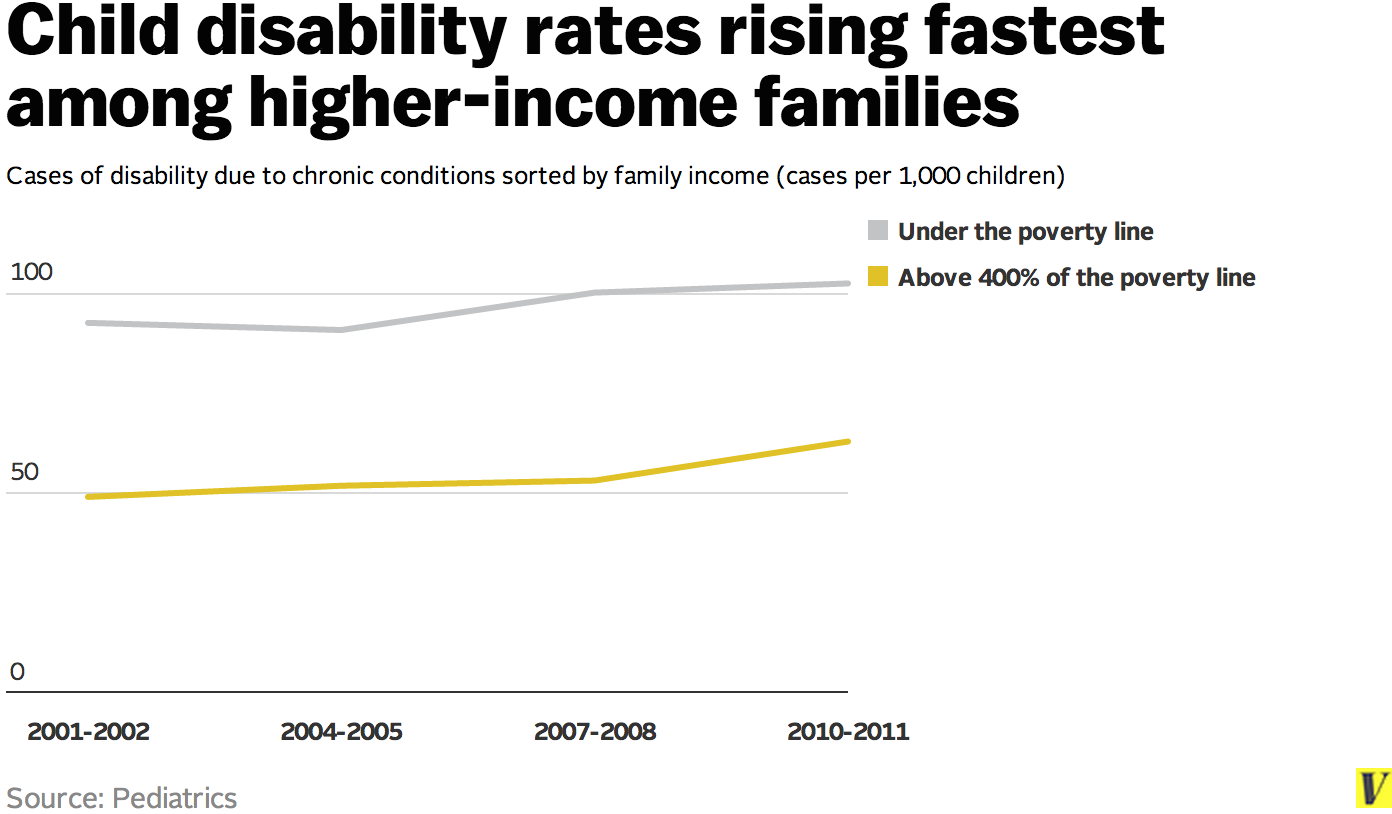
http://cdn2.vox-cdn.com/uploads/chorus_asset/file/1331118/di...
http://www.cdc.gov/ncbddd/birthdefects/downsyndrome/images/p...
I believe what I was saying mostly applies to the US and western European countries.
For all their faults, communist countries at least took science education seriously. The idea that a woman and man have a finite amount of time to produce healthy offspring is a 'bad culture fit' for the kind of egalitarian orthodoxy that is not taken seriously in ex-communist countries.
If you're in the US or western Europe, try asking random average people what the age limits are before the natural fertility rate is 1% per month (it is age 45).
http://www.huffingtonpost.com/2014/02/19/age-female-fertilit...
Ironic that it advises education. Most IVF clinics don't accept eggs after 42 because the probability of an IVF cycle working is less than 5%.
Here's a study showing the contradiction between what women/men have the impression of being true, with the facts.
http://humrep.oxfordjournals.org/content/27/5/1375.abstract
"Even though participants generally perceived themselves as being educated about fertility issues, both men and women vastly overestimated the ages at which female fertility shows a slight and a marked decline. The discrepancy between their perceived knowledge and what is known regarding the science of reproduction is alarming and could lead to involuntary childlessness if men and women's reproductive decisions are based on inaccurate perceptions."
I don't find it alarming that people make mistakes. I do find it alarming that this was well known in the past, even when people couldn't read and now university students are less educated than their grandparents.
Come to think of it, maybe the canard about education reducing the reproduction rate in developing countries is correct after all...