The urethane wheels on a skateboard, longboard, or roller blades are really very efficient.
Also, wouldn't higher grip/friction ratios enable using less tire material to get the same contact patch/grip otherwise achieved? Kind of seems like a logical hypothesis to me, though if there's a reasoning flaw hey would be game to see it for sure!
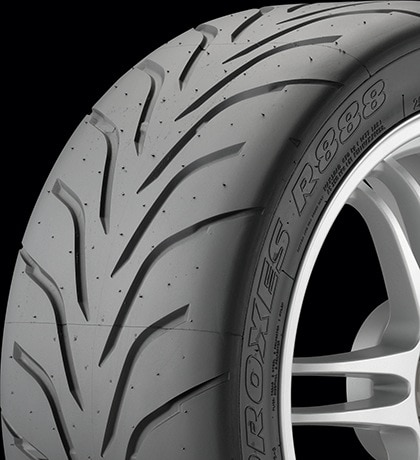
[1] http://www.tirerack.com/images/tires/toyo/toyo_proxes_r888_p...
Also, grippier rubber is usually a trade-off between tread wear and friction. Though with the price of a Boosted board, I imagine their customers would prefer more grip and a few percent of their purchase price for new tire replacement every couple hundred miles.
Where I live and work (Dallas area), there are actually quite a surprising number of longboard riders in various areas. For a very car-centric culture in Texas, there is a big local push to make things more pedestrian / low-key friendly - best example being the music & arts hotspot (now gentrifying yay) called Deep Ellum. Lots of Ruckus scooters, long boards, beards and piercings kind of area.
Honestly I think the Boosted Boards would be great for the general North Texas terrain - flat! - but the condition of the pavement / concrete and gaps caused by high heat and brief winter freezes leaves the conditions very sub-optimal. I have friends into RC cars and seeing the different wheel rim & tire combinations made me think "Why not apply this kind of tech to this board here?" because with a general upgrade I think a Boosted Board would work a whole lot better. Offhand and all, but gut instinct.