The form factor alone has challenges which the public will not be willing to sacrifice for the experience, which could turn out to be mostly a gimmick. Some things people don't think about;
-) looking at your keyboard/input device whilst wearing a VR headset
-) being the same room as other people for prolonged periods of time with a headset
-) sharing experiences with other people close to you
-) what are you going to experience on VR, that needs VR so bad? Who is going to pay/develop and what is this content going to be... can it actually deliver, making good immersive software is incredibly hard.
-) and then cost...
The real problem with this question is that it's like asking someone in 1990 what the point of 3d graphics are. Beyond what's been announced, there's no definite timeline for anything - who besides John Carmack would even imagine the genre (FPS) that would popularize 3d graphics cards? Who could predict that Castlevania would suck in 3d but Mario would find an amazing niche?
I trust that most people reading this thread are alive and well, so clearly we don't "need" VR, but I can imagine some incredibly engaging experiences that will make today's best entertainment options look second best at best. Imagine playing a competitive game of ping pong with a friend that lives a few states away. Imagine watching a sporting event from the best seats in the stadium. Imagine being able to golf at a luxurious seaside resort... after work in the middle of winter, in your apartment. Imagine watching movies on a movie screen sized virtual screen. All of these are necessarily limited by being based on existing analogues, some or all of which could be completely off the mark, but I for one believe we'll see some breakthrough experiences rather quickly.
Let's not even address cleanliness (honestly, one reason I have no interest in most of the 3D TV tech that came out, even if it offered cheap, passive glasses).
It's useful, and cool, but really only applicable when you're physically alone or wiling to be deliberately isolated from others in your physical proximity.
The VR market is likely to be limited to gamers and a few devs for at least the next few years. That's not a tiny market, but it's much smaller than the market for phones and tablets.
It's also unlikely to take off until VR becomes social, with couples and families all playing in the same virtual space on the same hardware.
Costs and hardware requirements make that impossibly expensive for now.
Elite: Dangerous. DiRT Rally. Minecraft. Movies, and interestingly, documentaries. These are all currently available.
Further down the line, VR will replace multi-screen setups. As a developer I'm very excited to code in a VR IDE.
I'm not totally sold on the virtual desktop concept, but I'd be willing to try it. But I, personally, benefit greatly from actual tactile feedback with paper and handwriting. A multi-sensory experience (touch, sight, smell, sound) is far better than a 1-2 sense experience (sight w/ maybe sound) for memory retention and recollection.
the HTC Vive and Oculus don't come out until next month.
When VR has proven itself, with R&D investments of other companies, Apple will release a near-perfect refinement of all things VR and everyone will hail them as the savior who brought VR to the world.
Is that not innovation? Maybe technically the iPhone was just a combination of existing technologies, but it went above and beyond them to the point that it was essentially new.
Yes but not at the same level of complexity. The processor, electronics, battery technology and manufacturing processes require multi-decade spanning consistent efforts, iterations and investments to make it happen.
Once the difficult part is done. What remains now is building a end user product. Which has its own complexities. But once the hard part is done, the other parts are relatively easy.
There's no real reason for Apple to get into VR yet. They can make a deal with Oculus / Valve / Sony and have a decent VR product supported on Mac in under 6 months.
Everyone, whether it's on top of love, hate or indifference, wants to comment on Apple. That's how you know you've won (the money probably doesn't hurt either).
So what about VR? Only a hype by the tech savvy community and the lost and forgotten in a few years when it should be ready for mass market?
VR tech is actually quite impressive, and as a result people will figure out how to apply it to humans.
-With standard 2D monitors, nobody has to wear equipment on their heads.
-People have physical reactions to 3D/VR that they don't normally have in a 2D monitor.
-3D/VR requires each participant to have their own set of gear.
I think there's a lot of hype because many gamers are really excited the technology, and because we don't have any other up-and-coming tech to latch onto these days.
I've heard of the same thing being said about 3D TV, it quickly died a few years. I have a 3d Projector but never used it. I've tried a few 3D movies but prefer the standard vision.
In addition, we went through the VR fed back in the 90s, just like 3D TV, it died out after a few years.
Google Glass itself died out very quickly as well.
I have zero intentions of wearing a VR headset all day long, so this is ruled out for general computations. Gaming? I've stopped gaming many years ago. So, what is the purpose of VR or even AR for me?
The one single benefit that could convince me to wear an AR glass (Google Glass style) all day long if it comes with closed captioning support for real life, that to me as a hard of hearing person would provide so much benefits.
Me as a gamer, though, or somebody who is still interested in that, anyway, I must say I am exited :)
You could say the same about cars, but Apple is supposedly working on building one. The same could be said about watches before the Apple Watch was released too. I agree with your point, but I'm just playing devil's advocate.
Alone glasses that don't suck visually (people shouldn't notice the difference from a distance) and an all-day-battery-life would be features I'd spend $1000 upwards on, just because.
Officially, the answer that Apple repeatedly gave was that they "weren't impressed with any of the current offerings" and that they would not "rush to market with a product we're not proud of" (not exact quotes, but probably close enough). The unspoken truth of the matter was that the margins on existing netbooks were razor thin. When Apple finally did introduce the MacBook Air, it was more powerful and with better economics than anything else on the market by far.
The Eee PC was discontinued in 2013. The MacBook Air (and now MacBook) are still going strong today. Of course, this shouldn't be a surprise, Apple did the exact same thing with the MP3 player.
I suspect that something similar is going on with VR (and a whole host of other technologies). Until the first products hit the market and Apple has a sense for how the price/features/demand equation balances out, they'll be more than happy to sit on the sidelines. So no, I don't think there is a skunkworks team fashioning an end-to-end solution. This isn't about Apple not wanting to accommodate third party parts/devices. It's about building something that is good and makes money.
The latter would be necessary for Apple in the growing VR ecosystem but it could be great for many other areas that require an intensive GPU. And that's the argument of the piece.
But Apple doesn't care...
The thing about Apple is that, unlike almost all of their competitors, they really don't care about a "Mac in every home". They'd much rather target specific slices of the market where they can excel and make a lot of money (think BMW, not Ford).
Apple is usually not a first to market type. They are a first to market with an amazing, polished, product type. They'll wait to see what gets proved in the market and what doesn't.
That hasn't been true for a long time. The iPad might have been the last product fitting that description, and it was released in 2010.
Ok, 'amazing' and 'polished' are aesthetic judgements on which reasonable people can disagree. How much better would it have to do to count, in your opinion?
The consumer versions of the Oculus Rift and the HTC Vive are both very good. In particular, Oculus has very much already taken the Apple approach to VR. The final Rift has a high-end, premium design, including a lot of quality-of-life enhancements that feel like they came straight from Steve Jobs, like an obsession with making the cable as thin and lightweight as possible.
Oculus is pushing hard for a completely vertically integrated product. They're designing the software and the hardware specifically for each other and aren't very interested in supporting anything outside their ecosystem. They're having developers produce titles specifically for the Rift to maximize the quality of the user's experience.
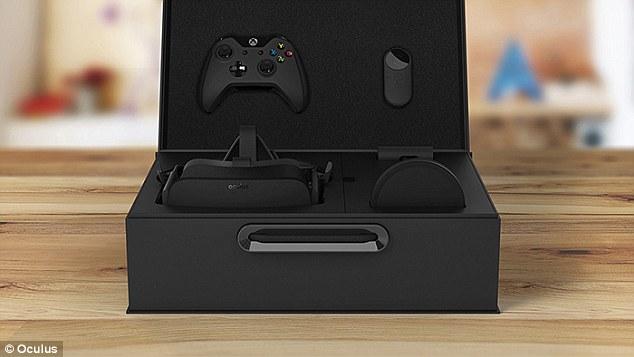
Even the box they're shipping the Rift in is premium: http://3dprint.com/wp-content/uploads/2016/01/box1.jpg
The Touch motion controllers, expected to ship later this year, are similarly premium, and they don't just track their own locations in space but also offer basic finger and gesture recognition. They also have a small, lightweight design, enabling fine interactions with virtual objects.
Frankly, I can't think of what Apple could bring to this space even if they tried. Oculus has already done all the classic things that Apple does, and Apple is extremely inexperienced with game development.
With regard to the HTC Vive, I would argue that it's a little less polished and premium than the Rift, but it's also the first mover for fully tracked motion controllers, so I regard it as one of the most innovative products of the last five years. It's highly unlikely Apple is going to find a way to be more innovative, and even then by the time they enter the market the Vive and Rift will have moved on and both will be equally premium by that point.
IMHO, Apple has absolutely no chance in VR outside of smartphones, because Oculus has already played all of Apple's traditional tricks and Apple has no experience with games. Mobile VR is an area where they might excel, though the screens in the current iPhones are not nearly good enough to compete with the S7 and Gear VR, so at the very least they'd need to design future iPhone screens with VR in mind. This would mean both increasing the resolution and trying to maximize the pixel fill ratio.
Then there's the problem of positionally and wirelessly tracking the smartphone user's location in 3D space, a problem that Oculus and Google are already tackling. Google has Project Tango and Oculus has John Carmack working on this problem. Once they achieve this goal, Apple will be even further behind with even smartphone VR.
There is so much hardware for body tracking, environment tracking and soon Magic Leap that Apple really will be irrelevant when or if they enter the market.
I mean, just consider the patents involved here - it will be hell for them to enter!
Assuming HN does something similar then a relatively small number of quick early upvotes can send something to the front page.
A more mixed response from front page only viewers will send it crashing down.
[0] https://web.archive.org/web/19970715124703/http://www.apple....
Apple gets a lot less love overall from game developers than from web developers because they don't appear to care about games and don't give the kind of developer support game devs are used to from other platform holders and hardware companies. Even if they were to announce something in the VR space it would take a lot of changes to their approach for that to change I feel.
On June 28th 2007, Apple was asleep at the wheel with smartphones.
On January 26th, 2010, Apple was asleep at the wheel with tablets.
I'm not trying to claim Apple is definitely in VR, but if you don't know by now that Apple is committed to not announcing products that aren't ready to show/sell, then you haven't been paying attention.
*edit formatting
And after removing all the unnecessary HP crapware, driver installation headaches and navigating the weird hybrid UI, I was reminded of how much I haven't missed.
Sure, that sucks for developers and us on the bleeding edge, but it doesn't hurt Apple one bit. At the most optimistic, it'll take 2-3 years for VR to become mainstream, and as long as Apple comes out with a polished Apple-like solution by then, they won't miss out on the market. If their offering is compelling then content will be ported to it.
If they wait much longer than 2-3 years competing solutions may achieve critical mass.
At this point, releasing any solution before nVidia's Pascal and/or AMD's Arctic Islands is available would be just silly. Maybe we'll see something in September.
I don't believe that console/PC VR will be the VR that makes it in the end. Small tablet (mobile phone) VR is where it will land and reach massive success.
The industry needs to keep the phone upgrade cycle working, people already reduced their reliance on their PC and laptop with their phones.
Samsung is nailing it with GearVR. High res, high powered phones are going to iterate until people simply put their phone in a $100 headset and experience VR that way. It'll be cheap to become a social experience, watching sports in 3D and as much gaming as people will want in that mode.
But the head movement will be limited, nobody wants to do 180-360 degree turns in their living room and walk around. The key of video games is to sit and barely move and still be able to control a muscle packed fighter or whatever. Looking around can be fun but at the end I will do only small 5-20 degree turns (left , right, up, down) and then a big screen creates a similar level of immersion with no movement required.
Maybe we haven't find the killer use case yet but I assume it will be like with 3D screens, the added value of a 3D screen to a normal screen is so small that nobody will care.
I've tried the consumer Oculus, the HTC Vive, and the Hololens.
Think something like the Samsung Gear but an all in one headset thats nicely designed. Out of all the current available headsets, I think the PS is the best designed and best fitting. I think Apple could do better.