The energy use would be heavy, but it might be worth the cost given the transportation energy savings and higher productivity and happiness of the city population.
Source: Me in wintertime Sweden.
For circadian light you just need something that is sufficiently bright and blue. ... or just blue for that matter, blue LEDs are cheap and efficient.
None of this can improve surroundings that are otherwise unpleasant...
A building's function is to block unpleasant sun, but a window's function is to let it in and to control it. Artificial sunlight could enable more control over the sunlight factor.
Regarding circadian rhythm, it is not fully understood and blue light may not be the only important factor. Perhaps the visual sense that there is sunlight is also an important cue. But yes, blue light is clearly important. I would hope that any public lighting system would strongly take it into account.
For example, the color and feel should reflect what happens in the natural world! The LED lights being installed on city streets right now might cause problems for us (not to mention the blue light in our screens).
Unpleasant surroundings take a huge toll on people in cities. I am dismayed by the noise, pollution, lack of overhead cover, and threatening cars when I walk around SOMA and so many other places. A single tech like artificial sunlight won't cure all ills, but it is a tool that will help cities become larger and more livable.
Construction robotics, new materials, methods to better maintain plants and trees, and obviously transportation are also important tools in this fight.
There must be some scientific knowdlegde regarding this that I ignore.
What we consider sunlight is essentially the light emitted by any object at 6000K, which is reasonably easy to achieve but somewhat difficult to contain. And actually mimicking the sun is usually not the best method (for one, the unfiltered UV would be very unhealthy). It's possible to approximate the visible part of that light though, and we're gradually getting better at it.
While definitely not the same, there should be an opportunity for something costing less than $35,000 while still getting closer.
For example here is DIY 90,000 lumen flashlight that supposedly cost $250-350:
https://www.youtube.com/watch?v=-JVqRy0sWWY&t=3m40s
Using 10 of these LED chips:
http://www.ebay.com/itm/100W-Warm-White-3000K-LED-Light-High...
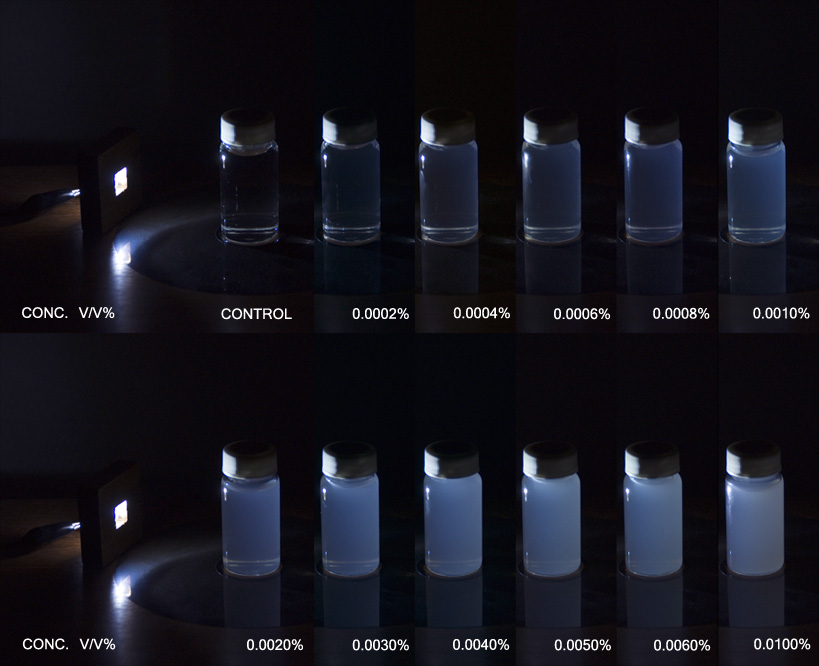
Maybe milk could be used? :)
http://2.bp.blogspot.com/-wyj6iHUndhg/UXpUk6HxfLI/AAAAAAAACu...
http://thestandardmodel.blogspot.com/2013/04/when-i-was-chil...
It feels like they charge so much not because there would be some principal engineering / technical obstacle but simply because they can. They have been the first who realized something like this can be done (now that LED lighting progressed so far) and for rich customers this is a feature that's highly desirable, so they are willing to pay so much.
They do have a good marketing. Their business model depends on others thinking there is some special magic.
I had to see that reddit post to even start questioning that something like this could be replicated.
... or even make el cheapo version with just bluish tinted mirror.
I was expecting this to be slightly more common by now.
The sun availability does seem to affect my daily energy and motivation.
One of many possibilities to consider: https://en.wikipedia.org/wiki/Seasonal_affective_disorder
However, for far less than this you can get a lamp that provides a similar effect, if not the same aesthetics.
This is the type of 'simple' invention that you could never really anticipate but changes the future profoundly.
Well, maybe in one more generation once the resolution becomes higher.. and adding hand tracking.. and a UV lamp on a servo..
Let's hope you don't have a significant other that you're supposed to be spending time with.
Come on, this isn't a solution.
(Not your fault though - their website is pretty sparse on information.)
[0] http://www.coelux.com/en/solutions/index
[1] http://www.hispotion.com/coelux-artificial-lighting-system-t...
1. http://www.google.com/patents/US8469550
Here's to hoping this tech gets commoditized and indoor spaces get a lot more pleasant.
It's nice, but it's not $30,000 nice. Still, the cost of LEDs per lumen continues to drop. LED auto headlights are now below $100.
There's a market for this in hospitals, to keep patients in intensive care units in sync with the outside world. Fake windows with lighting tied to the day/night cycle have been used. Here's someone looking for funding for a startup to do a really good virtual window.[1]
It does look very realistic, but makes me wonder whether having an uneven light distribution is desirable or whether it's something that's needed to trick the body.
This was on Product Hunt a while ago: https://www.producthunt.com/tech/coelux
...and obligatory musical reference: https://www.youtube.com/watch?v=txPqV0lZaSE
With the added benefit you could use a low-power light for those distances.