If you can find a private source of community-driven-randomness that'd be even better.
[1] https://en.wikipedia.org/wiki/Cryptographically_secure_pseud...
Real-world cryptographic hash functions, however, just try to approximate a random oracle. They attempt to achieve pre-image resistance and collision resistance by making their output look random. Certainly that's the case with SHA-224, which is what this code uses.
Some real-world CSPRNGs do just use hash functions directly. Linux's /dev/random implementation, for example, just returns a SHA-1 hash of its entropy pool contents. Yarrow (used in Mac OS X, iOS, and FreeBSD) does a final pass on its output using a block cipher, but requires that the hash function used in its earlier stages produce random-looking output. Fortuna is similar.
Of course, this code is insecure and should not be used in production, regardless of the internal details, simply because all of the inputs are known to a third party i.e. Twitter.
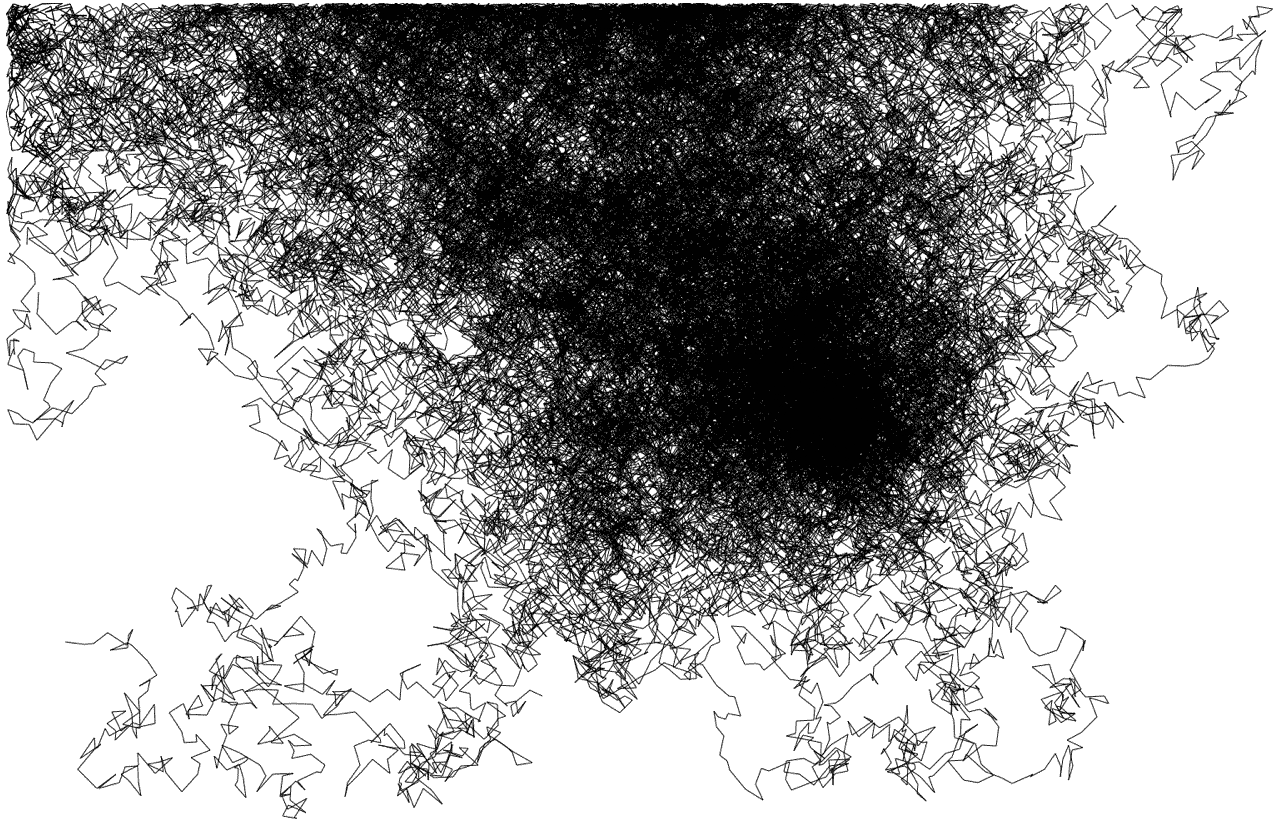
http://binarymax.com/brownian_2.gif
I'll have to find some time to recode it to use this service :)